Keisha Lance Bottoms’ Projected Georgia Win Breaks a Barrier for Black Women
The former Atlanta mayor is projected to become the first Black woman elected governor of a U.S. state. Her November 3 victory puts healthcare, housing and affordability promises on a new governing clock.

Official campaign video from Keisha For Governor, linked in its May 20, 2026 release about the previous night’s primary victory. This is campaign background explaining her priorities, not her November general-election victory speech. The original video upload date was not independently verified.
The Black Angle News Desk · AI-assisted reporting
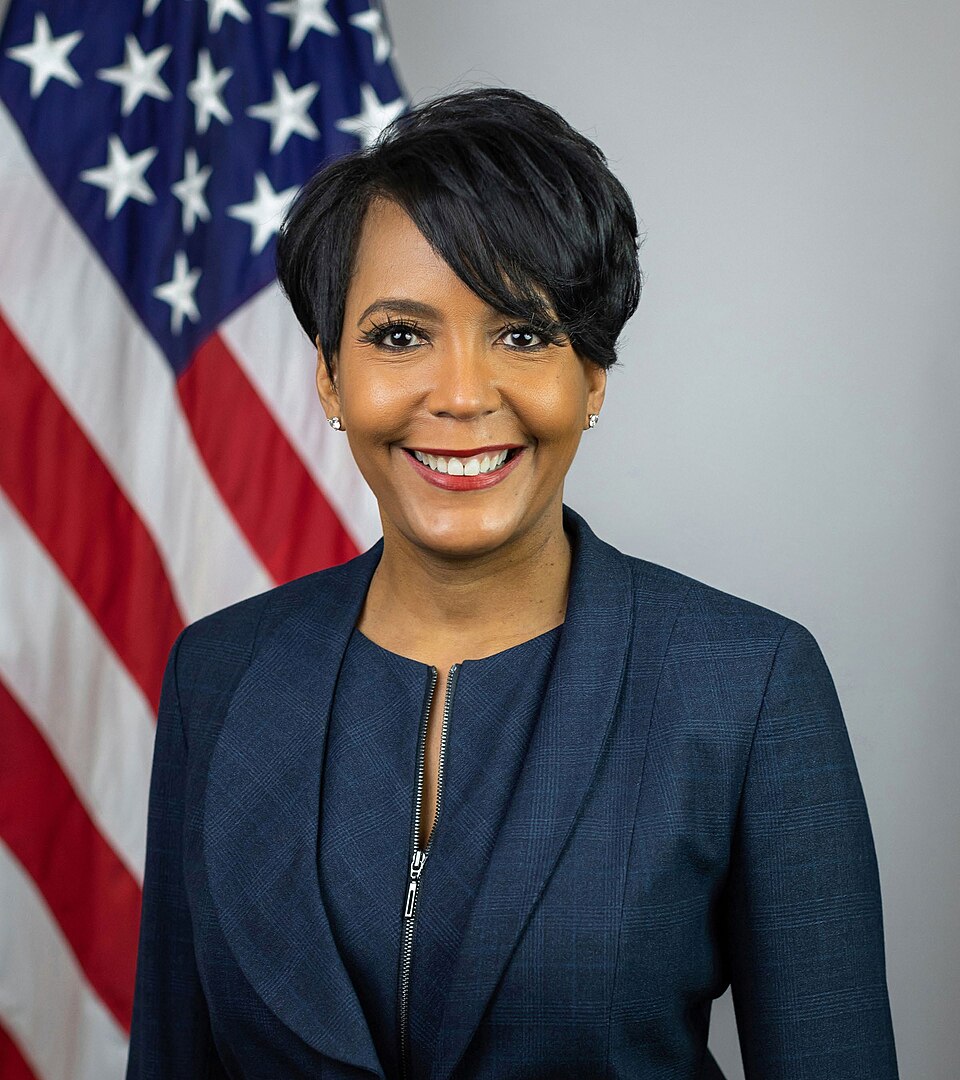
Keisha Lance Bottoms is projected to win Georgia’s November 3 governor’s race, defeating Republican healthcare executive Rick Jackson and becoming the first Black woman elected governor of a U.S. state. The Associated Press called the contest Tuesday night, according to local election reporting. The former Atlanta mayor will also become Georgia’s first Black governor and its first woman governor when she takes office.
This is an election-night race call, not a certified final count. Ballot totals can still change, so this report does not present an unfinished margin as the final result. Bottoms is succeeding Republican Brian Kemp, who cannot seek another consecutive term. Her win ends more than two decades of Republican control of the governor’s office; it does not, by itself, establish who will control every other part of state government.
A barrier falls after successive campaigns
For Black women, the significance reaches beyond a party gaining an office. Before this election, no Black woman had won a state governorship. Georgia Democrats had nominated Stacey Abrams in both 2018 and 2022, and she lost both contests to Kemp. Bottoms’ victory comes on the third consecutive general-election ballot on which the party chose a Black woman for the state’s highest executive job.
The path was not a story about representation alone. Bottoms entered with a governing record: Atlanta City Council service, a term as mayor from 2018 to 2022 and a subsequent senior-adviser role in Joe Biden’s White House. She earned her undergraduate degree at Florida A&M University and her law degree at Georgia State University. Her campaign therefore combined a historic possibility with experience voters could examine and opponents could challenge.
Jackson made that record a central point of attack, criticizing her leadership of Atlanta during the pandemic and unrest in 2020. Bottoms defended her tenure and focused on the material needs of families. The campaign’s competing arguments deserve that distinction: criticism of an administration is not the same thing as proof that a single mayor caused a national crisis, and a historic candidacy does not place a public record beyond scrutiny.
What the victory does—and does not—deliver
The clearest next test is what happens to the promises. Bottoms’ published platform calls for Medicaid expansion, stronger rural healthcare access and investment in maternal health. It proposes faster housing approvals, more help for renters and homebuyers, and an affordable-housing fund. In education, she has advocated wider early-learning access. These remain proposals—not benefits that became available when a television network or news service called the race.
Affordability also separated the candidates’ approaches. Bottoms offered measures including property-tax relief and allowing local governments to waive taxes on groceries. Jackson emphasized large tax cuts and his business experience, arguing that he could continue Republican economic leadership. The result decides who will lead the executive branch; the details, funding and implementation of new programs still have to follow.
Our analysis: representation and accountability
Our analysis: the most useful way to follow this transition is to hold two ideas together. Breaking an exclusionary barrier matters, particularly for Black women who have long participated in electoral politics without holding this office. But representation and delivery are different measures. Residents will be able to judge the next administration through concrete questions: whether healthcare becomes easier to obtain, whether housing plans produce accessible homes, and whether promised relief reaches families.
That means watching the transition team, the first budget and specific legislation rather than assuming every campaign commitment is already settled. It also means avoiding a sweeping claim that all Black Georgians voted the same way or share one set of priorities. A statewide victory establishes a winner, not a single explanation for every voter’s decision.
For now, the verified development is historic enough without embellishment: Bottoms has been projected to win Georgia’s governorship. Final certification and the transfer of power are separate next steps. The work of evaluating the government she builds begins after the celebration, not instead of recognizing what this election has changed.
Election-night projection, not certified totals. Local reports identify the AP race call as their shared basis; their original campaign reporting and the published platforms supply context. No final margin or concession is asserted. The lead video is from the May primary, not the November election.
Published by The Black Angle. Editorial standards & corrections.
The conversation (0)
Bring your perspective. Keep it thoughtful, relevant, and respectful. Community guidelines
Sign in or create an account to comment under your username. You can also comment as a guest; guest names are not verified.
Loading the conversation…