Hakeem Jeffries Has a Path to the Speaker’s Gavel—not the Job Yet
Democrats’ projected House victory puts the first Black speakership within reach. A caucus nomination and a floor vote still separate election night from that historic first.
The Black Angle News Desk · AI-assisted reporting
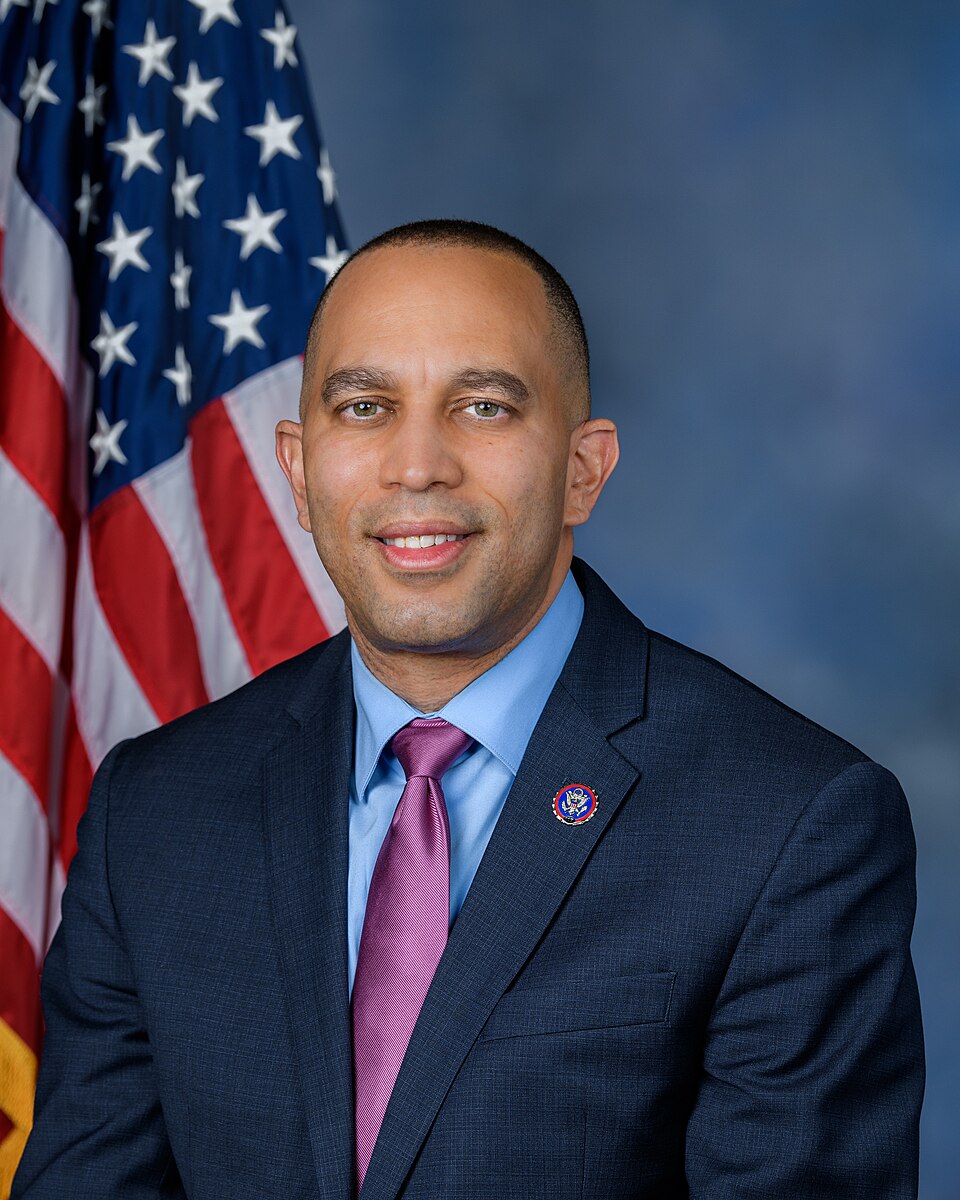
Hakeem Jeffries is positioned to become the first Black speaker of the U.S. House after Democrats’ projected victory in the November 3 midterm elections. That is a consequential opening in American political history. It is not, as of November 4, a completed speaker election.
The distinction matters beyond the wording of a headline. Voters elect representatives; those representatives choose the speaker. A party’s success across congressional districts creates the opportunity to lead the chamber, but it does not automatically install its leader. Jeffries’s path now runs through his colleagues and the new Congress in January.
The two votes still ahead
First comes the party’s choice of a nominee. Each House party caucus has its own internal selection process before the floor election. Jeffries is already the highest-ranking House Democrat: his official biography records unanimous leadership elections in 2022 and 2024. Those earlier choices establish his current position, not the outcome of the next speakership vote.
Then comes the House itself. Under the process described by the Congressional Research Service, members state their preferred candidate’s name in a roll-call vote. They are not required to support their party’s nominee, and they may name someone who was not formally nominated. A caucus endorsement and a House election are therefore separate decisions.
The winning threshold is a majority of votes cast for a person by name, with a quorum present—not invariably 218. Absences and votes of ‘present’ can change the arithmetic. If nobody reaches the required majority, the House votes again. That procedural detail is worth remembering whenever a projected seat count is presented as a guaranteed leadership result.
The House’s own historical record shows why the floor vote cannot be treated as ceremonial. Kevin McCarthy needed 15 ballots in January 2023. That does not predict a similar contest for Jeffries; it demonstrates that winning a party majority and assembling a majority for a particular speaker are different tasks.
What a majority can—and cannot—deliver
The incoming Democratic agenda described in ABC News’s original reporting centers on health-care costs and oversight. Jeffries has identified restoring Affordable Care Act premium subsidies and reversing Medicaid cuts as priorities. House Democrats also plan investigations of the Trump administration. These are stated intentions for the next Congress, not benefits already restored or findings already established.
There is an important difference between those tracks. A committee investigation can seek records and testimony; it is not itself a court judgment. A bill passing the House is also not the same thing as a change in law. Readers assessing promises about household costs should watch the actual legislation and its progress, not just announcements about what a majority wants to do.
For now, the final size of the Democratic majority remains unclear as counting continues. That makes precise claims about Jeffries’s room for defections premature. It also makes predictions about an effortless legislative program premature. A projected victory is a political opening, not a completed governing record.
A historic possibility with a practical test
Jeffries represents New York’s Eighth Congressional District. His earlier leadership roles include chairing the House Democratic Caucus and serving as whip of the Congressional Black Caucus. The prospective milestone is therefore not simply a new face arriving in Washington; it is a Black lawmaker moving toward the chamber’s top office after years inside its leadership structure.
The Black Angle’s analysis: representation and accountability belong in the same conversation. A first Black speaker would be historically significant without requiring Black readers to suspend scrutiny of policy choices. The useful next questions are concrete: who wins the nomination, who supplies the floor votes, what legislation actually moves, and what the investigations substantiate. Celebrating the possibility does not require announcing the outcome before the vote.
House control is based on election projections, not completed certification. Jeffries has not been elected speaker; the new House must hold that vote. The final size of the majority remains unsettled.
Published by The Black Angle. Editorial standards & corrections.
The conversation (0)
Bring your perspective. Keep it thoughtful, relevant, and respectful. Community guidelines
Sign in or create an account to comment under your username. You can also comment as a guest; guest names are not verified.
Loading the conversation…