The next chapter of Black storytelling belongs to its creators.
The camera is only the beginning. Owning the story means deciding how it is told—and who gets to see it.

A finished creative project from founder Sean JonPaul Foster’s All Black Media channel. Included as an example of creator-led storytelling, not a behind-the-scenes documentary.
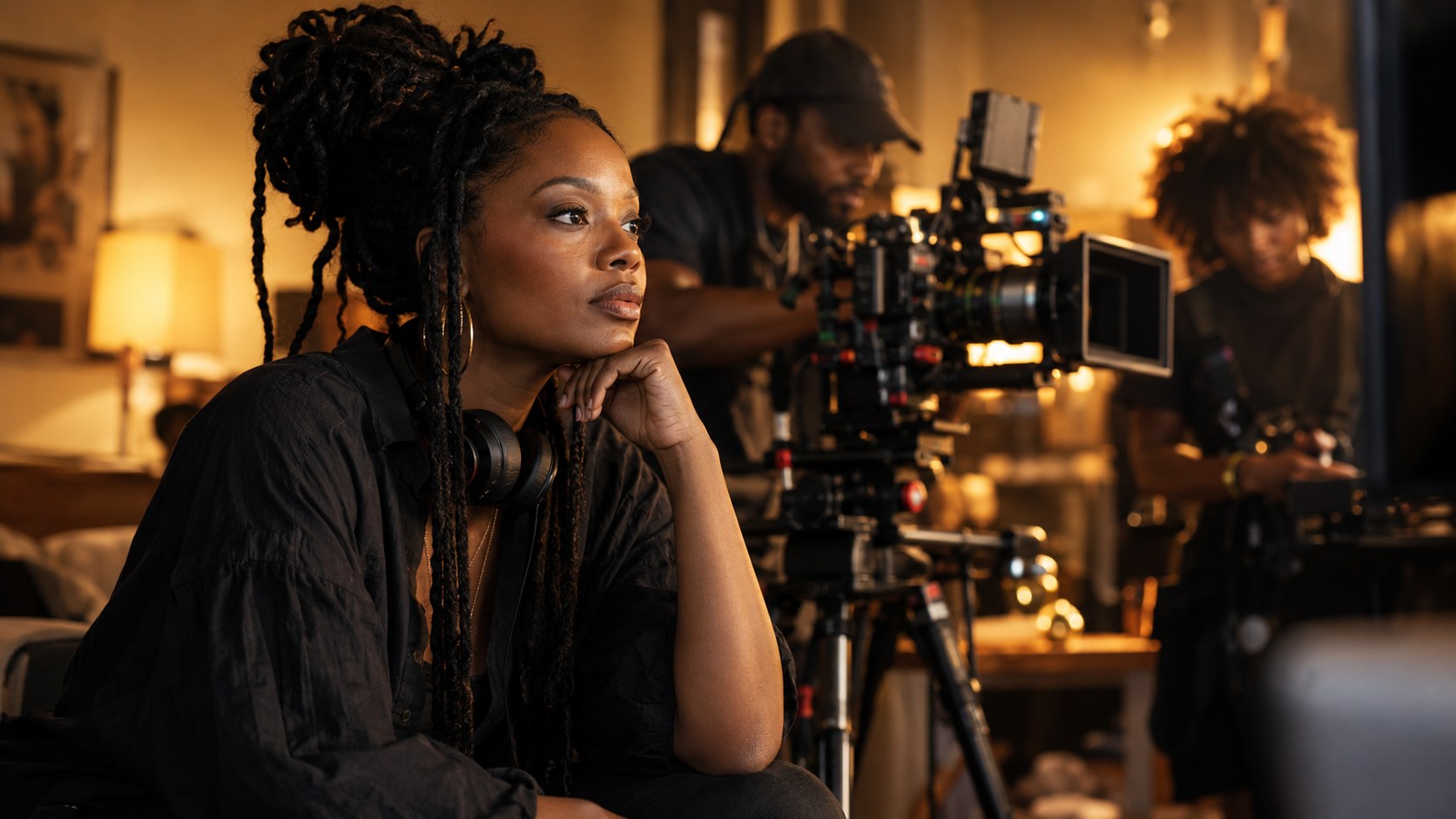
A family argument. A neighborhood legend. A love story that refuses to take the easy way out. Black storytelling has room for all of it. The question is how to create more space for the people who know these worlds to tell their own stories. For The Black Angle, that means treating Black audiences as potential makers as well as viewers.
The most useful response to a disappointing portrayal is not limited to criticizing it. Criticism can identify what is wrong; making something can show an alternative. A creator does not need to speak for every Black person. A specific family, neighborhood, sense of humor or unresolved argument can give a project a point of view that a broad statement about representation cannot.
Start with a situation
Start with one scene you wish existed. Write down who wants something, who stands in the way and what changes by the end. A woman trying to persuade her brother to come home for dinner has an immediate dramatic problem. “A film about the Black experience” has a subject, but it still needs a situation. Specific choices make a project possible to finish.
Then choose the smallest form that preserves the idea. If the essential pleasure is dialogue, an audio scene may communicate it. If it is a visual joke, a short film might work. If the audience needs to make a decision, a tiny game can express the premise. Beginning with a short, complete piece gives a creator something an audience can actually experience and respond to.
Use the tool, then make the decisions
New tools can help turn an idea into an image, a scene or a prototype. They can also produce a great deal of material that does not fit together. A character whose face changes, a conversation without a believable motive or a game with no clear objective still needs revision. Generating more output is not the same task as deciding what belongs in the finished work.
A useful creative brief makes those decisions visible. Describe the central character, setting, emotional tone and one action the audience should understand. Identify a reference for lighting, another for pacing and another for the kind of interaction you want. Explain the quality you are borrowing from each reference instead of simply asking for a copy of somebody else’s project.
Before calling the first version finished, watch or play it from beginning to end. Can a new viewer understand what is happening without your explanation? Can a player tell what to do and recognize when they have succeeded? Where does the piece lose momentum? Write down a few concrete problems, fix those and repeat. Specific feedback is more actionable than a general judgment that something looks cheap or feels wrong.
The Black Angle includes a creator account of the AI filmmaking process, a discussion of new Black gaming possibilities, and All Black Media’s video library. These are different ways into the same conversation: what do you want to make, and what does the available tool actually help you accomplish?
Stay responsible for the result
Creative control also means choosing what to present honestly. Label fictional simulations and AI-generated imagery so an audience can distinguish invention from evidence. Credit collaborators and original sources. Keep a record of the materials used. The ability to generate a familiar face, song or franchise does not by itself settle whether you may publish or sell the result.
An audience can participate without pretending every independent project is already great. Watch the official release. Share the creator’s own link. Explain which scene worked and where you became confused. Pay for work you value when that option is available and fits your budget. Thoughtful attention can help a creator identify what to improve without reducing the discussion to applause or dismissal.
Ownership, in the creative sense, begins with making decisions and staying responsible for them. More Black stories should mean more distinct voices, including voices that disagree. The next step can be small: one scene, one playable moment, one finished piece. What story would you make if you did not have to wait for somebody else to consider it worth telling?
Published by The Black Angle. Editorial standards & corrections.
The conversation (0)
Bring your perspective. Keep it thoughtful, relevant, and respectful. Community guidelines
Sign in or create an account to comment under your username. You can also comment as a guest; guest names are not verified.
Loading the conversation…