Hood Warfare 2: Criticize the Game. Bring Evidence for the Conspiracy.
The racism debate deserves context. The CIA theory needs proof. The Black Angle argues that our energy should also go toward protecting our history and building games of our own.

CashNastyReacts / YouTube. Gameplay upload dated October 14, 2026. Contains strong language and game violence.
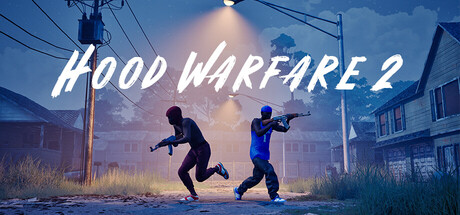
A video game can be crude or stereotypical without being a government operation. That distinction is getting lost in the argument over Hood Warfare 2. At The Black Angle, we are unconvinced by the rush to condemn it as a racist project, and the CIA theory has no demonstrated foundation. Disliking a game does not establish who made it, why or with whose money.
What the game actually is
Hood Warfare 2 launched on Steam on October 8. The store credits Trapstar Games as developer and publisher and lists it at $5.99. It is a Chicago-set multiplayer shooter built in Unreal Engine 5, with rival gangs and modes including Turf War, Hit A Lick and Chain Snatch. The developer describes fictional, exaggerated violence and humor and disclaims endorsement of real gang activity. Audiences can still question those creative choices.
The representation question is fair
The strongest objection is about representation. Critics see Black neighborhoods reduced to gangs, killing, theft and a narrow vocabulary of street stereotypes. Slurs and the use of Black suffering as entertainment are part of the discussion. Those concerns deserve a hearing. A person whose community has experienced violence may see mockery where another player sees a ridiculous shooter. Neither reaction requires us to pretend that every Black viewer thinks the same way.
Authorship matters, too. There is an understandable difference between a Black storyteller drawing on a world they know and an outsider selling a caricature of it. A white creator leaning on stereotypes and the N-word can raise particular questions about perspective and profit. But we cannot settle this game's case by inventing its creators' identities. Trapstar Games is a studio credit; the individuals behind it and their race have not been reliably established. Identity would provide context, not automatically prove either artistic insight or racist intent.
What happened with RDCWorld
The disagreement reached RDCWorld's October 13 stream. The group tried the game after being tagged in posts about it, encountered objections from viewers and dropped it shortly afterward. A circulated exchange included a donation urging them not to play a game the donor described as racist and CIA-made. Mark Phillips pushed back, invoking Grand Theft Auto as a comparison. The group then moved on to another game. The clip below is a reupload of that stream exchange, not an upload from RDC's official channel.

RDCWorld stream footage reuploaded by cashmoneyjay1 as “RDC Tries Hood Warfare 2.” Contains strong language.
That moment illustrates the pressure on Black entertainers to account for what they play. Viewers can object, and streamers can listen. Trying a game does not endorse every idea attached to it. The GTA comparison is debatable; government involvement still needs evidence.
Suspicion is not evidence
The CIA allegation has circulated in social-media reactions documented by Hip-Hop Wired. No evidence in the reporting reviewed for this article establishes that the agency created, funded or planted Hood Warfare 2. A small developer making a provocative game for attention or sales is a more ordinary explanation, although that motive is also an inference. We do not need to invent a covert operation to explain an inexpensive game finding an audience.
Nor can we report AI production as a settled fact. The game's appearance has prompted speculation, but appearance is not a production record. We have not verified a developer disclosure establishing how generative AI was used. Unreal Engine 5 is a game engine; computer-controlled opponents are not evidence that an AI system wrote the game. The broader opportunity in AI-assisted development is real without making this particular title its proven example.
Black distrust of government did not emerge from nowhere. The FBI's own history acknowledges COINTELPRO and its targeting of the Black Panther Party. Documented abuses deserve serious attention. Their existence does not prove an unrelated accusation about a new commercial game.
Bigger issues—with the facts intact
There are also current, checkable decisions worth challenging. On September 4, the U.N. General Assembly adopted the African-led “Correct the Map” resolution, 164–1, with six abstentions. The United States cast the sole opposing vote—not the United States and Israel together. The initiative encourages maps that represent land areas more proportionately; it does not physically enlarge Africa. The American objection was public, and can be criticized on its actual record.
In Philadelphia, the Trump administration removed slavery-history panels at the President's House site in January and replaced the exhibit in July after litigation. The original presentation documented nine people enslaved by George Washington. Historians and local officials criticized the replacement as sanitizing that history. These were documented changes to a specific historical exhibit, not proof that every Black monument was removed. They also met protests and legal challenges; saying nobody spoke out would erase the people who did.
These examples strengthen the argument for priorities without becoming proof of a single hidden plot. We can examine racial harm, protect historical truth and still decline to treat a fictional shooter as an emergency. We can also criticize a game without demanding that no one make or play it.
Build something, too
The most useful response goes beyond outrage. Build the neighborhood adventure, comedy, sports game or family story you wish existed. Support creators who give Black characters depth and variety. Our companion piece explores the emerging Black gaming opportunity. There are bigger stakes than winning an argument over one shooter: who creates the next wave of games, who owns the worlds inside them, and whether our imagination gets more room than our anger.
Commentary, as of October 17, 2026. Trapstar Games is the verified studio credit; individual identities, racial background, AI production claims and alleged government involvement remain unverified.
Published by The Black Angle. Editorial standards & corrections.
The conversation (0)
Bring your perspective. Keep it thoughtful, relevant, and respectful. Community guidelines
Sign in or create an account to comment under your username. You can also comment as a guest; guest names are not verified.
Loading the conversation…