The Black Angle’s top 20 Black movies of all time
From Do the Right Thing and Malcolm X to Soul Food and Waiting to Exhale, our picks celebrate the range of Black American cinema: the laughter, the love, the imagination and the unforgettable performances.
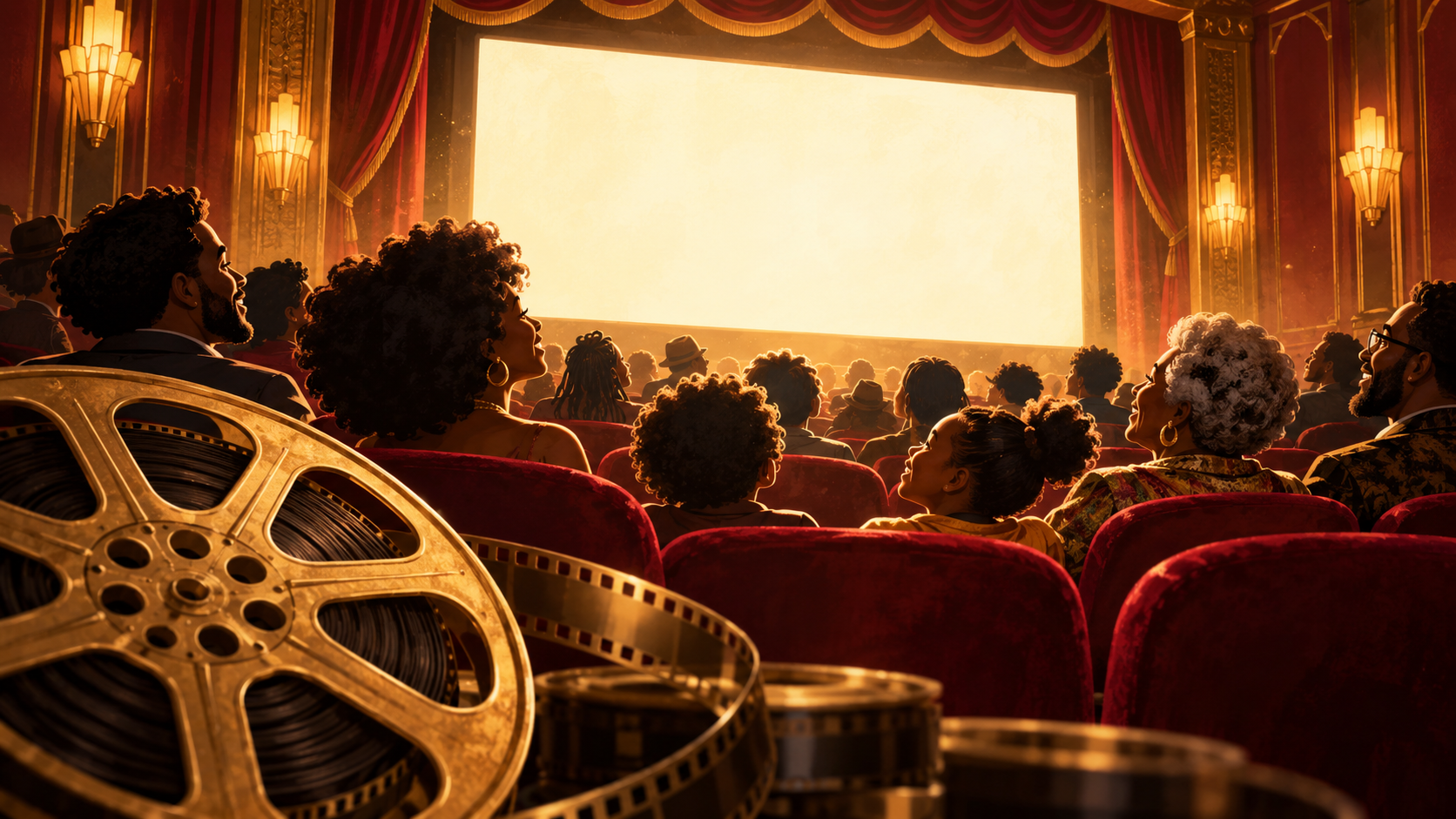
Great Black movies make a theater roar with laughter, start arguments that last for years, and turn quiet looks into something unforgettable. This list makes room for neighborhood comedy beside historical drama, and for love stories alongside horror and fantasy.
Each selection has a Black protagonist or a predominantly Black ensemble. Our ranking weighs filmmaking, performances, cultural resonance and rewatch appeal. We include American productions and co-productions, wherever their stories are set. These are The Black Angle’s editorial choices.
1. Do the Right Thing (1989) — Spike Lee turns a Brooklyn block into a world of competing loyalties, everyday humor and rising anger. Its color, music and confrontational energy make every encounter matter. It takes our top spot because its hardest questions remain alive long after the credits.
2. Malcolm X (1992) — Denzel Washington gives Spike Lee’s epic a commanding center, carrying Malcolm through profound personal and political transformations. The film makes room for his changing convictions instead of reducing him to a familiar photograph or speech. Its ambition earns the scale of the story.
3. Boyz n the Hood (1991) — John Singleton’s debut places friendship, fatherhood and the possibility of a future at the heart of its Los Angeles story. Cuba Gooding Jr., Laurence Fishburne and Ice Cube give those stakes weight. The young men’s vulnerability is as important as the danger surrounding them.
4. Moonlight (2016) — Barry Jenkins follows Chiron through three stages of life, letting silence and tenderness carry extraordinary force. Its attention to Black queer experience expands the emotional range of this list. The beauty of the filmmaking never makes the character’s loneliness feel distant or decorative.
5. Get Out (2017) — Jordan Peele builds a terrifying film around the gap between a welcoming smile and what lies underneath it. Daniel Kaluuya’s watchfulness gives the audience its bearings. The satire lands because the tension works, and the horror works because the social observation is so precise.
6. The Color Purple (1985) — Our selection is the original film adaptation of Alice Walker’s novel. Whoopi Goldberg’s Celie anchors Steven Spielberg’s drama, while Oprah Winfrey’s Sofia supplies unforgettable defiance. The women’s relationships give the film its deepest strength, making survival and self-respect feel personal rather than abstract.
7. 12 Years a Slave (2013) — Steve McQueen’s film centers Solomon Northup, a free Black man kidnapped into slavery, played by Chiwetel Ejiofor. Its severity serves a purpose: the audience must confront what that system does to a human life. Ejiofor keeps the individual visible within the historical enormity.
8. Coming to America (1988) — Eddie Murphy and Arsenio Hall turn a prince’s search for love in Queens into a showcase for comic invention. The pleasure lives in the supporting characters as much as the romance. Few entries here offer such an inviting combination of fantasy, affection and sheer silliness.
9. Soul Food (1997) — George Tillman Jr. understands how much can gather around a family dinner table: love, resentment, obligation and memories nobody agrees on. Vanessa Williams, Vivica A. Fox and Nia Long give the sisters distinct personalities. The film earns its place by making ordinary family bonds feel consequential.
10. In the Heat of the Night (1967) — Sidney Poitier’s Virgil Tibbs brings intelligence and resolve to a murder investigation in a hostile Mississippi town. Norman Jewison’s thriller holds attention through the case and the charged encounters around it. Poitier’s composure makes every challenge to his dignity register.
11. Friday (1995) — Ice Cube and Chris Tucker make Craig and Smokey’s neighborhood feel like a place you could recognize after five minutes. F. Gary Gray gives the comic ensemble space to shine. Its spot here honors timing, character and the cinematic pleasure of spending a day on the block.
12. Love & Basketball (2000) — Gina Prince-Bythewood gives Sanaa Lathan’s Monica an athletic ambition that matters as much as her feelings for Omar Epps’s Quincy. Their romance has something real to negotiate: two people trying to grow without surrendering their dreams. That makes its intimacy worth rooting for.
13. Menace II Society (1993) — Allen and Albert Hughes bring an unsettling intensity to Caine’s life in Watts. Tyrin Turner and Larenz Tate anchor a film where danger can arrive before anyone has time to think. Its force comes from making consequences impossible to keep at a comfortable distance.
14. Black Panther (2018) — Chadwick Boseman gives T’Challa dignity, while Ryan Coogler makes Wakanda a place rich with competing ideas about power and responsibility. The spectacle belongs on this list, but so does the argument underneath it: what should a powerful Black nation owe to the wider world?
15. Set It Off (1996) — Jada Pinkett, Queen Latifah, Vivica A. Fox and Kimberly Elise make friendship the emotional engine of F. Gary Gray’s crime drama. The robberies supply suspense; the women’s loyalty gives it meaning. The ensemble keeps the human cost in view even as the action accelerates.
16. Cooley High (1975) — Michael Schultz’s film gives Black teenage friendship the full range of comedy, embarrassment, aspiration and grief. Glynn Turman and Lawrence Hilton-Jacobs make the central bond convincing. The Chicago setting and Motown soundtrack help build a world whose everyday pleasures deserve to be remembered.
17. A Raisin in the Sun (1961) — Lorraine Hansberry’s story of the Younger family makes a home, an insurance check and competing dreams carry enormous dramatic weight. Sidney Poitier, Claudia McNeil and Ruby Dee give the arguments different kinds of urgency. It remains a powerful film about who gets room to grow.
18. Waiting to Exhale (1995) — Whitney Houston, Angela Bassett, Loretta Devine and Lela Rochon give Forest Whitaker’s adaptation of Terry McMillan’s novel its warmth and bite. Romantic disappointment is part of the story; the women’s friendship is what sustains it. Their room to be funny, furious and vulnerable matters.
19. Sinners (2025) — Ryan Coogler and Michael B. Jordan, playing twin brothers, bring Black characters to the center of an ambitious horror story. Its place here is our boldest recent pick. We value its imagination now while acknowledging that its lasting reputation is still being formed.
20. The Wiz (1978) — Diana Ross, Michael Jackson and an extraordinary ensemble carry this musical journey through an urban Oz. Sidney Lumet’s film earns our affection through performance, design and its commitment to fantasy. Black cinema deserves this kind of joyful imaginative space alongside its grounded dramas.
Honorable mentions: Eve’s Bayou, House Party and Crooklyn. Twenty places cannot hold every film that deserves a conversation. Which movie would you move higher, and which one belongs here instead? Tell us in the comments—and make the case for it.
An editorial ranking by The Black Angle, not a poll or an institutional ranking. Film dates, credits and premises were checked using the American Film Institute, Criterion, studio materials, BAM and Whitney Houston’s official site. Assessments of quality and placement are our editorial judgments. AI-assisted writing and source review.
Published by The Black Angle. Editorial standards & corrections.
The conversation (0)
Bring your perspective. Keep it thoughtful, relevant, and respectful. Community guidelines
Sign in or create an account to comment under your username. You can also comment as a guest; guest names are not verified.
Loading the conversation…