The Black Angle’s top 10 Black movie directors
From Spike Lee and John Singleton to Ryan Coogler and Ava DuVernay: our ranking of ten distinctive filmmakers, with a starting film for each.
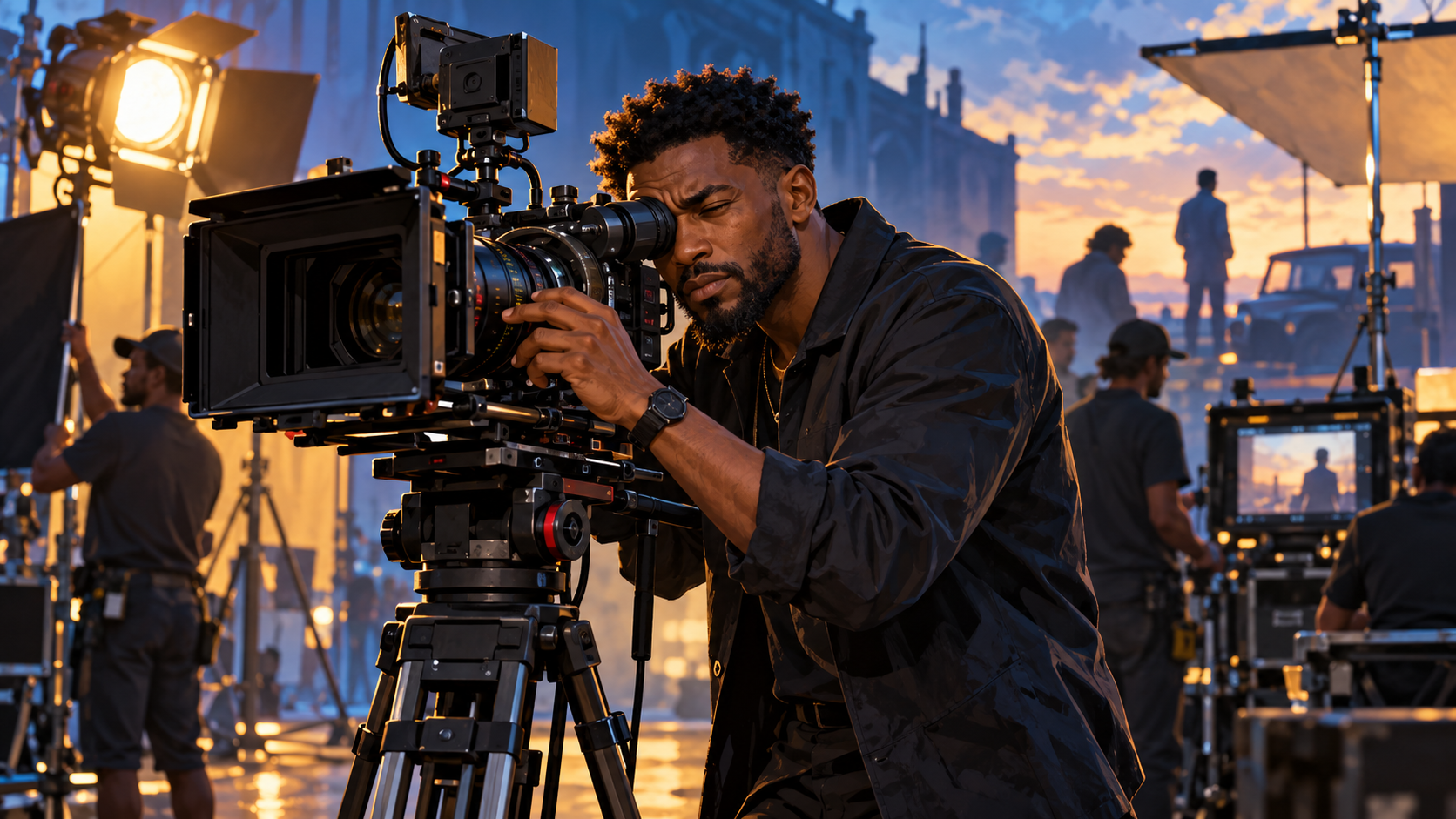
A great director gives a movie a personality you can recognize before the credits roll. In Black cinema, that can mean the heat of a Brooklyn block, a conversation that changes a romance, or a hero who finally gets to occupy the center of the screen. These are The Black Angle’s top 10 Black movie directors: an editorial ranking that weighs distinctive filmmaking, cultural impact, range and lasting influence. It spans generations and includes Black British filmmaker Steve McQueen alongside American directors. Each entry offers a starting point for your next movie night.
1. Spike Lee — The voice at the center of the conversation. Do the Right Thing, Malcolm X and Crooklyn show why Lee takes our top spot: he can make public conflict intensely personal without sanding away anyone’s contradictions. His characters argue, joke, compete and take up space. The neighborhood itself becomes part of the cast. Add the controlled suspense of Inside Man and his range becomes even harder to dismiss. Start with Do the Right Thing, then watch Malcolm X to see how that intimate attention holds up on a much larger canvas.
2. John Singleton — He made the neighborhood matter. Boyz n the Hood earns its emotional force by making friendship, family and ordinary aspirations matter before violence threatens them. Singleton’s attention to young Black people also runs through Poetic Justice, where romance and grief share the road. We rank him this highly because his best filmmaking insists that people who are routinely reduced to a headline have entire lives. Start with Boyz n the Hood; follow it with Poetic Justice for a different rhythm and a different kind of vulnerability.
3. Ryan Coogler — Intimacy on a blockbuster scale. The distance between Fruitvale Station and Black Panther is enormous in production size, but Coogler’s interest in family, responsibility and belonging connects them. Creed turns an inherited name into an emotional struggle of its own; Sinners gives his storytelling another register through horror and music. His place here reflects the strength of that combination: spectacle with people at its center. Start with Creed for the emotional pull, then return to Fruitvale Station and see how much he can accomplish at a smaller scale.
4. Barry Jenkins — A look can carry a whole scene. Moonlight and If Beale Street Could Talk make room for Black tenderness, desire and interior life with exceptional care. Jenkins trusts a pause, a face and the distance between two people. Medicine for Melancholy already shows that attention in a smaller romantic story. We value the way his films let vulnerability remain complicated instead of turning it into a lesson. Start with Moonlight, then try If Beale Street Could Talk for the meeting of romantic intimacy and James Baldwin’s storytelling.
5. Jordan Peele — The scare stays with you. Get Out, Us and Nope make an unusually strong case for horror as a place to think about race, class, spectatorship and American life. Peele understands that an unsettling idea works best when the audience also cares what happens next. A joke can expose danger; an ordinary interaction can become unbearable. His high placement rests on the distinctive worlds he builds and the arguments they leave behind. Start with Get Out, then watch Nope for a wider canvas and a different relationship to spectacle.
6. Ava DuVernay — History with people inside it. Selma is our strongest argument for DuVernay’s place here: it treats a freedom struggle as the work of people making difficult choices together. Middle of Nowhere brings that same attention to the private costs of incarceration and the choices facing a woman whose husband is imprisoned. DuVernay’s strength is making large structures visible through individual lives. Start with Selma, then go back to Middle of Nowhere; the contrast makes her command of both public history and intimate drama especially clear.
7. Gordon Parks — Style, dignity and presence. The Learning Tree and Shaft offer two very different routes into Parks’s filmmaking. One gives a young Black person’s coming of age the space of a major studio feature; the other puts an assured Black detective at the center of an urban thriller. We prize that range, and the insistence that Black lives can carry an image rather than serve as its background. Start with Shaft for Richard Roundtree’s screen presence, then turn to The Learning Tree for a more reflective register.
8. Steve McQueen — The power of staying with an image. The Black British director behind Hunger and 12 Years a Slave brings a demanding visual discipline to stories about bodies, power and survival. His films can be difficult, and that difficulty has a purpose: they resist letting the audience pass quickly over suffering. We rank him for the control and concentration of his work, not simply its seriousness. Start with 12 Years a Slave, understanding that its depiction of slavery is harrowing; Hunger offers another intense example of his approach.
9. F. Gary Gray — Range that deserves its flowers. Friday, Set It Off and Straight Outta Compton make a persuasive three-film introduction. Comedy, crime drama and a music biopic ask for different kinds of timing, and Gray gives each its own energy. His place on this list recognizes a filmmaker whose popular appeal belongs in the conversation about craft. Start with Friday for its comic rhythm, then watch Set It Off for the way friendship gives an escalating crime story its emotional stakes.
10. Oscar Micheaux — Independence as a filmmaking practice. Long before today’s conversations about owning the story, Micheaux built his own production company and handled multiple parts of getting movies made and seen. Within Our Gates and the surviving 1938 version of Birthright offer entry points into his work. His films confront racism while placing Black characters’ ambitions and conflicts on screen. We include him for both the filmmaking and the example of persistence. Start with Within Our Gates, allowing for a silent film’s different pace and its disturbing depictions of racial violence.
Ten places cannot hold the whole tradition. Gina Prince-Bythewood, Julie Dash, Kasi Lemmons, Melvin Van Peebles, Bill Duke, Antoine Fuqua and Tyler Perry all deserve further conversation. The best use of a list like this is to find a filmmaker whose work you want to explore beyond the one title you already know. Who would make your top three, and which movie makes the case? Tell us in the comments.
An editorial ranking by The Black Angle. Placement and critical assessments reflect our judgment; this is not an audience poll. AI-assisted writing and source review.
Published by The Black Angle. Editorial standards & corrections.
The conversation (0)
Bring your perspective. Keep it thoughtful, relevant, and respectful. Community guidelines
Sign in or create an account to comment under your username. You can also comment as a guest; guest names are not verified.
Loading the conversation…