Tamara Tunie’s First Emmy Capped a Breakthrough Night for Black Daytime TV
‘Beyond the Gates’ won four awards in its first year of eligibility, while Tracee Ellis Ross, Keke Palmer and Star Jones also reached career milestones.

The National Academy of Television Arts & Sciences’ official ceremony replay includes the October 30 awards presented to Tamara Tunie, Tracee Ellis Ross, Keke Palmer, Star Jones, Sherri Shepherd and the credited ‘Beyond the Gates’ teams. Video credit: The Emmy Awards / NATAS.
The Black Angle News Desk · AI-assisted reporting
Tamara Tunie’s return to daytime television now has an Emmy attached to it. The actor won Outstanding Lead Performance in a Daytime Drama Series: Actress on October 30 for playing Anita Williams Dupree, the matriarch at the center of CBS’s ‘Beyond the Gates.’ It was Tunie’s first Emmy after a television career that began in daytime nearly four decades ago.
‘Beyond the Gates’ won across performance and craft
The award did not arrive as an isolated star turn. ‘Beyond the Gates’ collected four trophies in its first year of eligibility: Tunie’s lead performance, Ambyr Michelle’s emerging-talent win for Eva Thomas, lighting direction for episode 104 and a hairstyling-and-makeup tie for episode 103. The official winners report names the craftspeople behind those last two awards, making the night a recognition of the crew building the show’s visual world as well as the actors carrying its story.
A new soap entered an old, difficult format
That breadth matters for a series that entered a television form famous for endurance but resistant to new arrivals. Created by Michele Val Jean, ‘Beyond the Gates’ premiered in 2025 as the first new daytime soap on a major broadcast network since ‘Passions’ in 1999 and the first daytime soap with a predominantly Black cast since ‘Generations.’ Its wealthy Dupree family gave daytime a contemporary Black dynasty without making race the only subject its characters were allowed to have.
Tunie put the moment inside a longer Black history
Tunie used her acceptance speech to place the win inside a longer Black performance history. She acknowledged Black actresses who opened doors in daytime, beginning with Cicely Tyson, and called the award the ‘best welcome back to daytime ever.’ She also thanked her 92-year-old mother, Evelyn Tunie, who crossed the country to attend. The moment connected a career milestone to family and lineage rather than treating it as an overnight breakthrough.
Tracee Ellis Ross won for a project she helped build
The ceremony produced other firsts for Black women working beyond the roles for which many viewers first knew them. Tracee Ellis Ross won her first Emmy when ‘Solo Traveling with Tracee Ellis Ross’ took Outstanding Travel and Adventure Program. Ross is an executive producer on the Roku series, which follows her through Morocco, Mexico and Spain and makes the freedom—and occasional discomfort—of traveling alone part of the story.
Keke Palmer’s KeyTV work earned daytime recognition
Keke Palmer added her first Daytime Emmy to two previous Primetime wins when KeyTV’s ‘Glam Through the Ages’ won Outstanding Daytime Short Form Program. The official report credits Palmer among the executive producers alongside Lenoria Addison, Sharon Palmer and Max Wyeth. The series uses beauty, hair and fashion history to examine cultural representation, while KeyTV reflects Palmer’s larger effort to create production opportunities for other storytellers.
The firsts extended beyond one show
Star Jones and Corey Jovan won Outstanding Daytime Personality — Daily for ‘Divorce Court,’ giving Jones her first Daytime Emmy. Sherri Shepherd won Outstanding Daytime Talk Series Host for the final season of ‘Sherri.’ Those victories were spread across drama, travel, short-form production, courtroom television and talk—evidence that the night was not one narrow representation story, but a wider showing of Black women as performers, hosts, executives and format-builders.
Four wins do not end the work
Awards cannot by themselves secure a show’s future or solve the economic pressure facing daytime television. ‘Beyond the Gates’ did not win Outstanding Daytime Drama Series; ‘General Hospital’ took that category. Still, four wins from 15 nominations give the newer soap a meaningful first-year record. They also answer a question the show has faced since its debut: whether a Black-led soap would be treated as a cultural experiment or judged as a full participant in the genre. The voters recognized performance, emerging talent and two production crafts.
The Black Angle’s view: recognition must become continuity
The Black Angle’s view: Tunie’s award is powerful because it honors both arrival and return. Daytime helped launch her career, then welcomed her back in a role built around the authority, glamour and complications of a Black family matriarch. The larger night showed what changes when Black women are not confined to appearing on screen but also shape the projects, networks and formats around them. The milestone is real; the next measure is whether the industry sustains the people and programs that made it possible.
What the video and image show
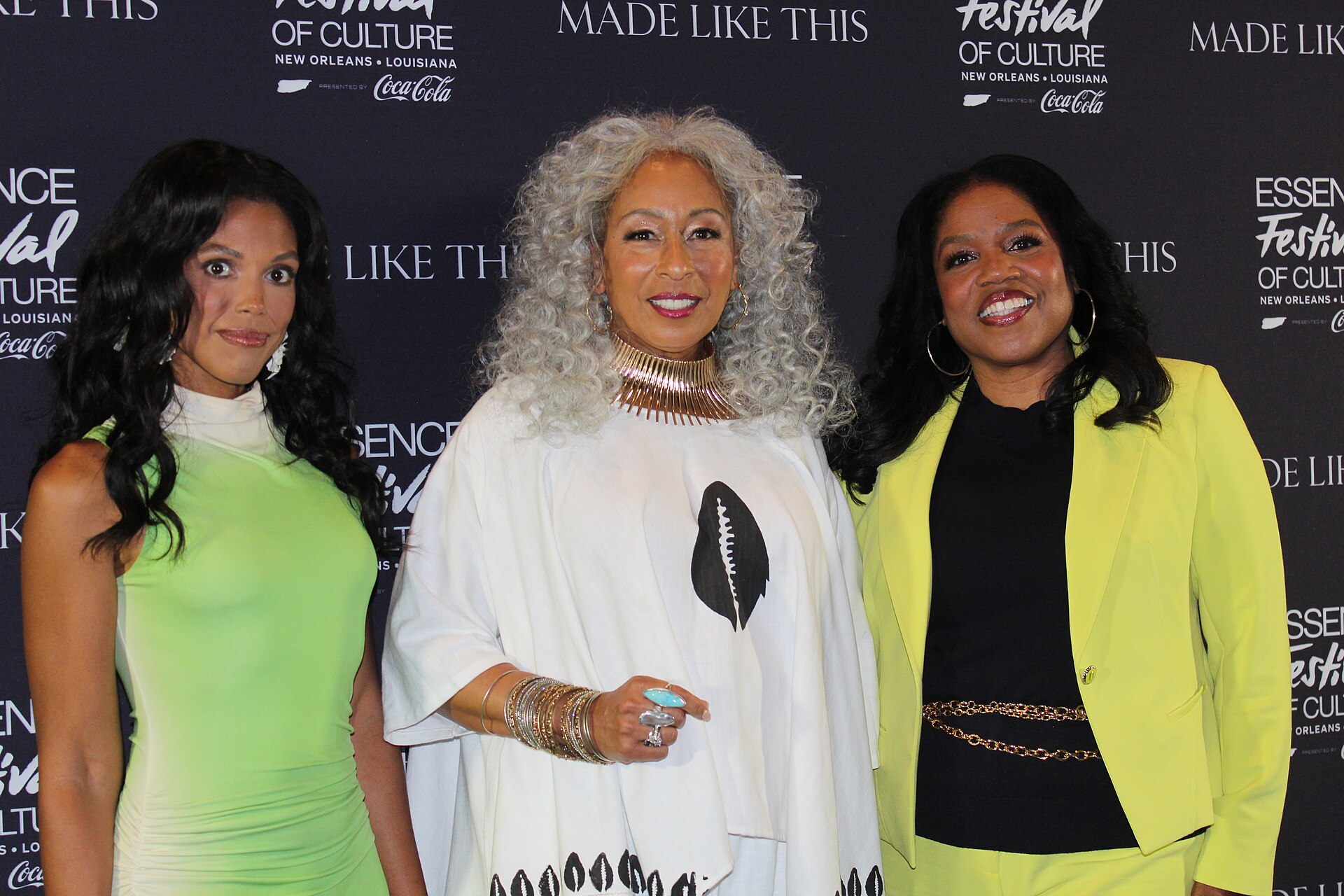
The attached video is the National Academy of Television Arts & Sciences’ official full ceremony replay. The cover photograph is from Essence Festival in July 2025 and is labeled as archive context; it does not depict the October 2026 awards. The winners and credited teams are confirmed in the Academy’s official report and corroborated by multiple independent outlets.
The official winners report confirms each category and credited team. The ceremony took place October 30; this article was published the following evening and does not present the awards as breaking news.
Published by The Black Angle. Editorial standards & corrections.
The conversation (0)
Bring your perspective. Keep it thoughtful, relevant, and respectful. Community guidelines
Sign in or create an account to comment under your username. You can also comment as a guest; guest names are not verified.
Loading the conversation…