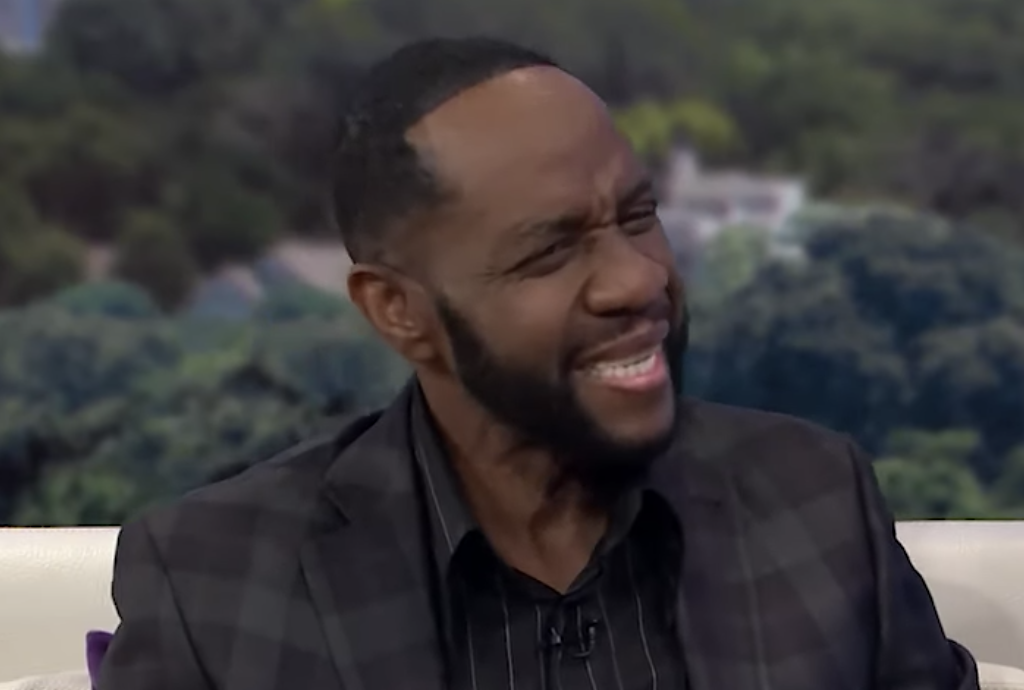
Freddie Jackson, voice of ‘You Are My Lady,’ dies at 70
The Harlem-born singer’s warm, precise ballads helped define 1980s R&B. His family announced his death without disclosing a cause.
The Black Angle News Desk · AI-assisted reporting
Freddie Jackson, the Harlem-born singer whose polished tenor carried some of the most enduring romantic songs of 1980s R&B, died October 5 at age 70. His family announced his death on his official Instagram account the following day, three days after his birthday. The family did not disclose a cause and said details about services would be shared later.
Jackson’s recordings made tenderness sound assured rather than fragile. He could move from a close, conversational phrase to a bright, sustained note without losing the intimacy at the center of a song. That balance made ‘Rock Me Tonight (For Old Times Sake)’ and ‘You Are My Lady’ slow-jam standards, but his legacy reaches beyond two familiar titles: he placed 10 singles at No. 1 on Billboard’s R&B chart and released four consecutive No. 1 R&B albums during his commercial peak.
From Harlem church music to the national stage
Born Frederick Anthony Jackson on October 2, 1956, he began singing in the choir at White Rock Baptist Church in Harlem. There he met Paul Laurence, the musician and producer who would become a central collaborator. Jackson later performed in New York clubs, joined the funk group Mystic Merlin and sang behind Melba Moore before returning to the city and recording demos with Laurence. The path was rooted in the Black institutions that have nurtured generations of singers: church, neighborhood stages, working bands and artists opening doors for one another.
A breakthrough built to last
That preparation met its moment in 1985. Capitol Records released Jackson’s debut album, Rock Me Tonight, and its title song spent six weeks atop the R&B singles chart. ‘You Are My Lady’ also reached No. 1 on the R&B chart and crossed to No. 13 on the Billboard Hot 100. The album went platinum, a level of sales Jackson repeated with his 1986 follow-up, Just Like the First Time. That second album produced more No. 1 R&B singles, including ‘Tasty Love’ and ‘Have You Ever Loved Somebody.’
The chart numbers explain Jackson’s reach, but they do not fully capture what listeners heard in him. His music arrived in a decade when electronic drums and synthesizers were remaking the sound of R&B, yet his phrasing remained connected to gospel, soul and the discipline of live singing. The arrangements were contemporary; the emotional center was timeless. His performances treated romance with seriousness and gave adult Black love a lush, mainstream presence without sanding away its musical roots.
The charts were not the only measure
Jackson received two Grammy nominations at the 1986 ceremony: best new artist and best male R&B vocal performance for ‘You Are My Lady.’ He did not win, a reminder that awards are only one measure of a career. The Recording Academy’s record lists those two nominations, while his sustained run on the R&B charts and the continued life of his songs offer a different kind of accounting—one written in radio memories, wedding playlists, quiet-storm sets and singers who learned from his control.
His catalog continued well beyond the period most associated with his name. Jackson released 15 studio albums across four decades, moving among major labels and independent projects as the music business changed around him. His official history highlights the 2018 single ‘Love Signals’ and the 2023 project My First Love, evidence that he remained engaged with recording rather than treating his early success as a closed chapter.
Health advocacy without speculation
In 2024, Jackson publicly shared that he had kidney disease and worked with the National Kidney Foundation to encourage testing and awareness. That advocacy belongs in the story of his later life, but it should not be turned into a claim about how he died: his family has not connected his death to kidney disease or announced any medical cause.
Jackson’s death leaves R&B without one of the voices that helped establish the sound and emotional language of the modern ballad. It also invites a fuller remembrance of a working artist—formed in Harlem, sharpened through bands and background singing, then trusted with songs that asked Black men to be open, elegant and emotionally direct. His family’s request for privacy deserves respect as listeners return to the music and the care inside it.
Jackson’s family confirmed his death but did not announce a cause. Some early reports listed him as 69; his official biography gives October 2, 1956, making him 70 when he died on October 5.
Published by The Black Angle. Editorial standards & corrections.
The conversation (0)
Bring your perspective. Keep it thoughtful, relevant, and respectful. Community guidelines
Sign in or create an account to comment under your username. You can also comment as a guest; guest names are not verified.
Loading the conversation…