Forest Theater’s Grand Return Reclaims a South Dallas Cultural Landmark
The restored 1949 venue has reopened with performance spaces, an education lab and community facilities—turning a complicated history into working Black cultural infrastructure.
FOX 4’s local video report shows the restored Forest Theater and recounts its return to South Dallas. This external link opens the station’s video page. Video credit: FOX 4 Dallas-Fort Worth.
The Black Angle News Desk · AI-assisted reporting
The Forest Theater reopened in South Dallas on November 1, bringing a 1949 landmark back into regular use after years of restoration. The Grand Return celebration combined performances, local vendors and the relighting of the venue’s tower and marquee, which organizers said had been dark for more than half a century. Tamela Mann performed, and Dallas native Erykah Badu made a surprise appearance at a place she had helped revive in an earlier chapter.
A building shaped by segregation and neighborhood change
The building’s story is inseparable from the racial geography around it. CBS Texas reported that the Forest opened as a whites-only theater in a predominantly Jewish neighborhood. By 1956, as the area’s population changed, it began serving Black audiences. Highway construction later split the surrounding community and displaced residents, while the theater cycled through closure and shorter periods of activity. That history makes the reopening more complicated—and more meaningful—than a simple restoration reveal.
The Forest became a South Dallas performance destination associated with artists including Tina Turner, B.B. King and Gladys Knight. It closed in 1965, hosted occasional events afterward, and entered another active period from 2002 to 2008 with Badu’s involvement. The new project does not erase those interruptions. It places them inside a longer story of a neighborhood keeping cultural memory alive even when the building itself could not operate continuously.
The new Forest is more than a concert hall
The restored campus is designed for more than touring concerts. Reporting from theGrio describes a roughly 1,000-seat main hall, a 200-seat black box theater, a creative education lab, recording and podcast studios, classrooms and community space. Forest Forward, the nonprofit leading the project, presents the theater as an arts anchor tied to education and economic development in South Dallas rather than an isolated entertainment venue.
Access will determine what the investment means
That distinction will matter after the opening-night glow fades. A landmark can be beautifully restored while remaining difficult for nearby residents and emerging artists to use. The real measures will be the price and range of programming, the availability of learning and rehearsal space, the quality of local jobs, and whether neighborhood performers and businesses become recurring participants instead of ceremonial guests.
The Black Angle’s view: preservation should create opportunity
The Black Angle’s view: Black cultural preservation is strongest when it produces present-tense opportunity. Saving a marquee matters because architecture carries memory, especially in a community reshaped by segregation, disinvestment and highway construction. But the main achievement is not that the tower lights again. It is that the building now has rooms where a student can learn production, an artist can record, a small company can perform and a South Dallas audience can gather.
The first evening also showed why celebrity appearances should not become the whole story. Badu’s return connected the building’s earlier revival to its new era, and Mann’s performance gave the homecoming local and spiritual resonance. Yet the institution’s durability will depend on programming, operations and community access long after surprise guests leave the stage.
What the video and photograph show
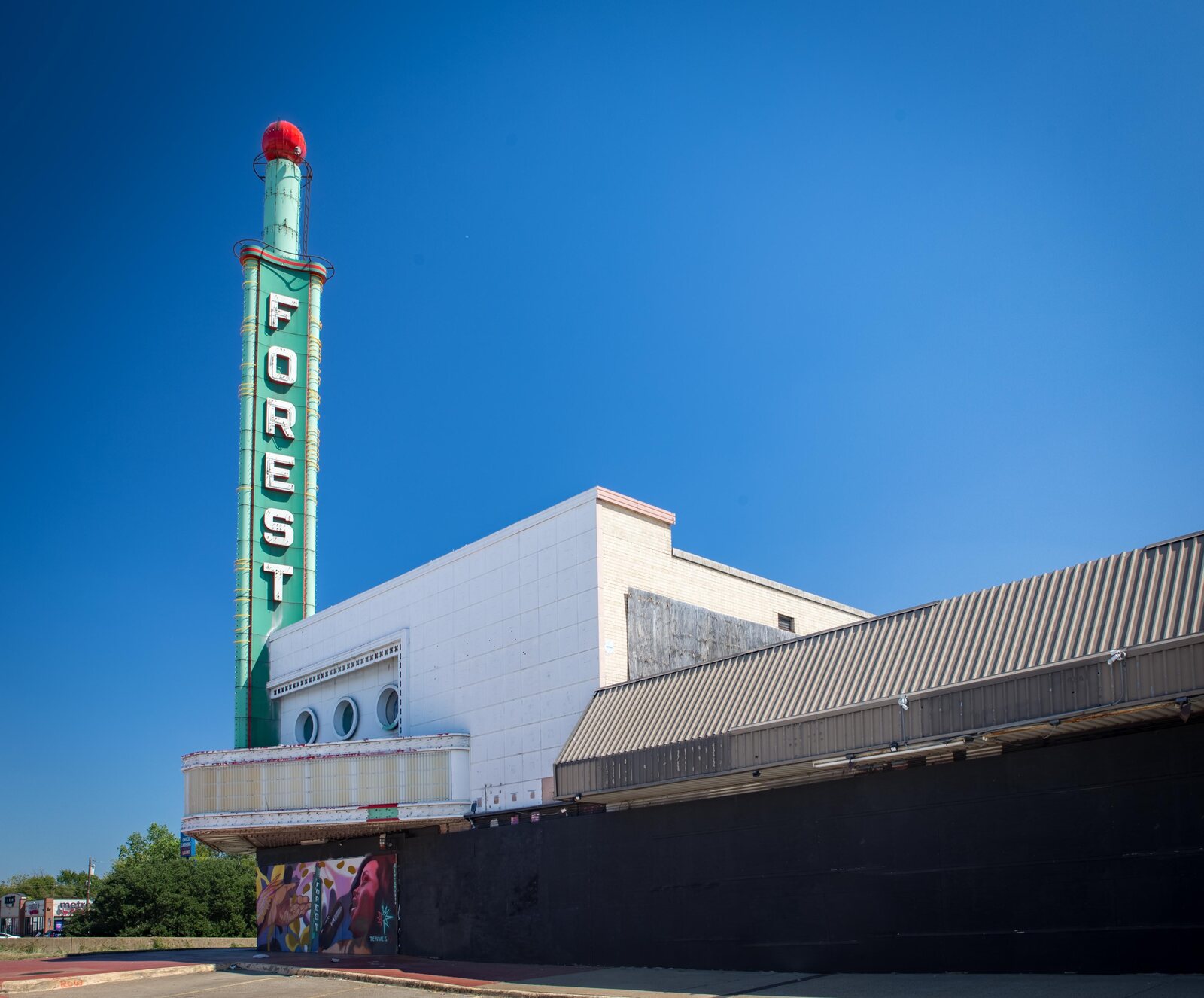
FOX 4’s reopening report is linked above because it shows the restored venue and the relit tower. The cover photograph is a licensed October 2022 archive image from before the completed renovation; it does not depict the Grand Return. That contrast is useful context, but the public opening is only the beginning of the larger test: whether a reclaimed Black cultural landmark can function as dependable neighborhood infrastructure year-round.
The November 1 reopening, tower relighting and restored facilities are confirmed by Forest Forward and multiple Dallas outlets. Published project totals vary because some reports describe the theater renovation while others describe a broader neighborhood investment; this article therefore does not combine those figures. The cover is a 2022 archive photo, and the lead video is FOX 4’s November 2 reopening report.
Published by The Black Angle. Editorial standards & corrections.
The conversation (0)
Bring your perspective. Keep it thoughtful, relevant, and respectful. Community guidelines
Sign in or create an account to comment under your username. You can also comment as a guest; guest names are not verified.
Loading the conversation…