Williamsburg’s First Baptist Church reclaims its historic meeting-house site
A reconstructed African Baptist Meeting House restores one of the nation’s earliest Black congregations to the Colonial Williamsburg landscape 70 years after its later church was removed.
The Black Angle News Desk · AI-assisted reporting
First Baptist Church of Williamsburg brought a displaced chapter of Black history back into public view Friday, October 9, as congregants and community members rededicated a reconstructed African Baptist Meeting House on the church’s original Nassau Street site. The ceremony formed the centerpiece of the congregation’s 250th-anniversary weekend and returned a visible place of worship to ground that had been reduced to a parking lot for decades.
The congregation traces its beginning to 1776, when free and enslaved Black worshippers organized despite Virginia laws that restricted Black assembly. Its early leader, Gowan Pamphlet, had been enslaved and later became one of the country’s first ordained Black Baptist ministers. The community worshipped in several places before establishing a permanent meeting house on Nassau Street around 1805, using repurposed materials. A tornado destroyed that structure in 1834, and a brick church completed in 1856 later stood on the property.
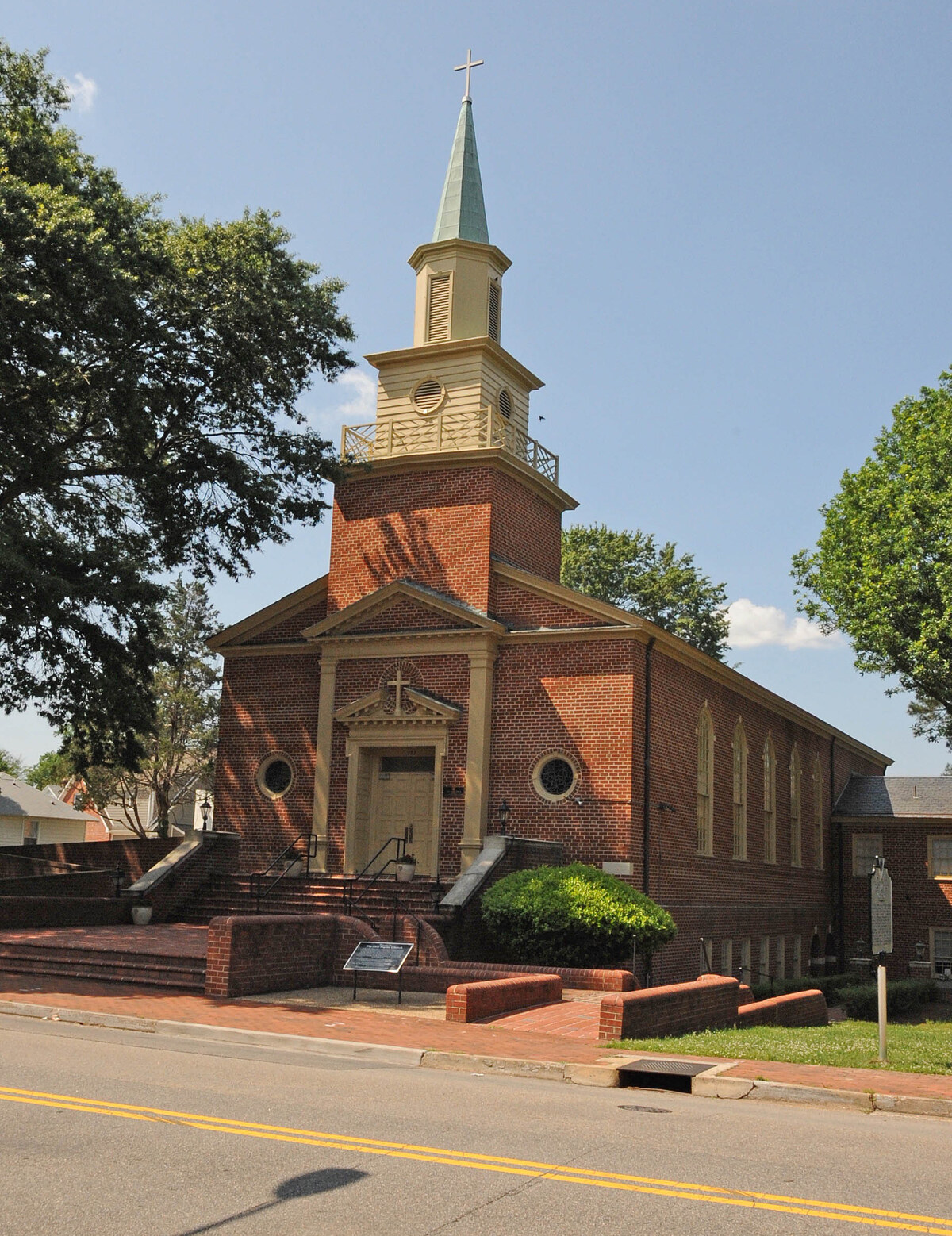
That later building survived into the twentieth century, but Colonial Williamsburg purchased the property and removed the church in 1956. The congregation moved to its current sanctuary on Scotland Street, while the Nassau Street site became a parking area inside the restored colonial landscape. Bringing the meeting house back is therefore not simply a reconstruction project. It addresses a physical absence created when an institution devoted to preserving Williamsburg’s past eliminated one of the city’s most important Black landmarks from the landscape visitors encountered.
The recovery began with the congregation’s memory. First Baptist’s oral history helped direct archaeologists to the former church site, where excavations identified the foundation of the 1856 building and evidence of the earlier meeting house. Archaeologists also found 62 burial shafts. Three burials were studied with participation from the descendant community; project materials say DNA evidence indicated African ancestry for one person. The remaining graves were left undisturbed, and the burial ground is now part of how the site is interpreted.
The new building is a historically informed reconstruction, not the surviving 1805 meeting house. It follows a roughly 16-by-32-foot footprint and uses pine and white oak, with half-round brick steps and other details drawn from archaeological and documentary evidence. Modern necessities—including heating and cooling, restoration-style glass and a planned accessible ramp—distinguish it from the original. Those choices make the structure usable while being honest about what has been recovered and what has been rebuilt.
Hundreds of people attended Friday’s celebration, which included a procession, music from the Nassau Street Remembrance Choir and a formal handoff between interpreters portraying generations of church leadership. The anniversary program invited visitors into the meeting house and burial ground after the dedication. Final finishing work and the accessibility ramp are expected to continue for several months, so the rededication marks a public return rather than the end of the project.
The work also changes how Colonial Williamsburg tells the nation’s founding-era story. First Baptist existed alongside the political world usually centered in accounts of eighteenth-century Williamsburg, but its members built religious community under slavery and racial control. Restoring the meeting house makes that Black institution harder to treat as an aside. The burial ground, in particular, asks visitors to see the site as lived community space rather than a symbolic installation.
Editorially, the most important feature of the project is that descendants and the living congregation helped guide the archaeology, research and interpretation. Reconstruction can never reverse the 1956 removal, and a new building cannot substitute for the original fabric that was lost. It can, however, return land, memory and Black agency to the same public frame. At 250 years, First Baptist is not being added to Williamsburg’s history; the meeting house makes visible that the congregation was already there, shaping it.
The rededication and archaeological record are documented by reporting and project partners. The structure is a historically informed reconstruction, not the surviving 1805 building; final finishing work and an accessible ramp remain underway.
Published by The Black Angle. Editorial standards & corrections.
The conversation (0)
Bring your perspective. Keep it thoughtful, relevant, and respectful. Community guidelines
Sign in or create an account to comment under your username. You can also comment as a guest; guest names are not verified.
Loading the conversation…