Essence Festival’s New Orleans Future Is Unsettled. Black Businesses Have a Stake in What Happens Next.
Reported talks with Houston and Atlanta have raised questions about 2027. Vendor payments, a proposed year-round partnership and local economic benefits are at the center of the dispute.

Background reporting from WVUE FOX 8 New Orleans after the July 2026 festival. This report predates the October vendor-payment and relocation reporting discussed below.
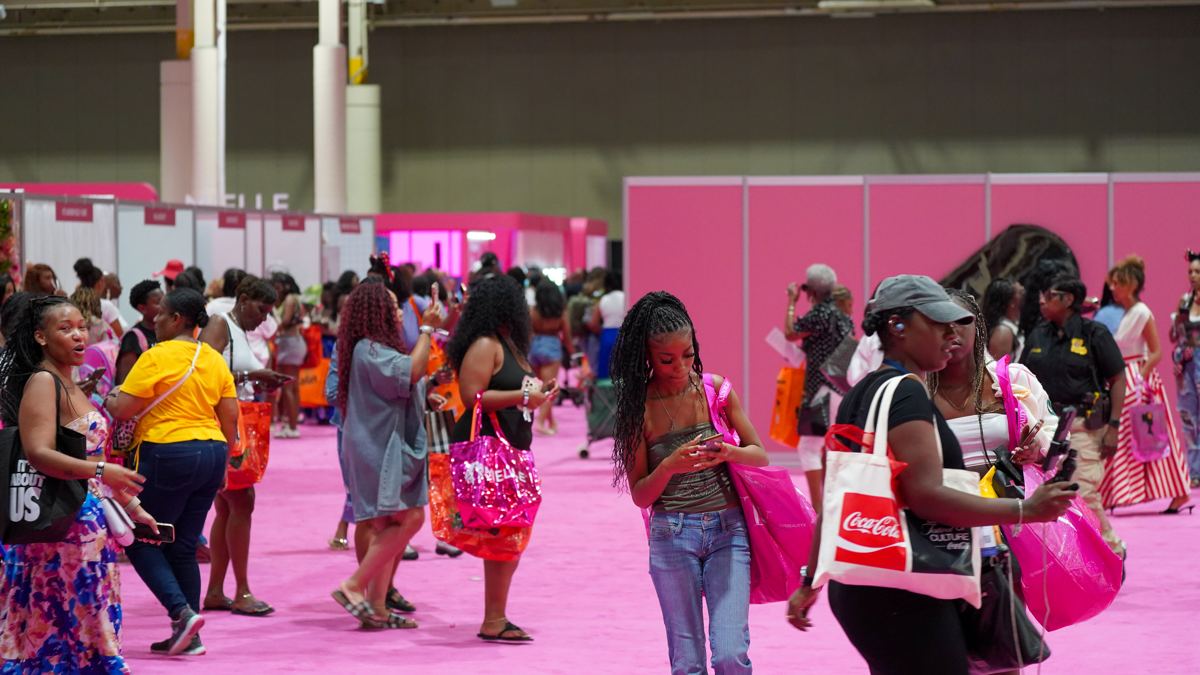
The Black Angle News Desk · AI-assisted reporting
Essence Festival’s future in New Orleans is unresolved after its city contract expired in September. Organizers have reportedly explored Houston and Atlanta for 2027, but a relocation agreement has not been announced.
The stakes extend beyond where the next concert takes place. Essence began in New Orleans in 1995 and became a major summer gathering for Black culture, with a particularly important place in Black women’s lives. Houston hosted the festival in 2006 after Hurricane Katrina. The current uncertainty raises a practical question for the businesses and workers around it: what would a lasting, fair partnership look like?
Why the negotiations are under pressure
Perdido Street reported October 26 that two out-of-state vendors had approached Mayor Helena Moreno about delayed 2026 payments; one said it was owed more than $500,000. The outlet did not identify the vendors. Its report of outreach to Houston and Atlanta relied on unnamed sources.
Kirk McDonald, CEO of parent company Sundial Media & Technology Group, told the outlet approximately $11 million had been paid to Louisiana partners and promised vendors would be paid in full. He attributed some delays to $200,000 he said unnamed civic partners still owed as of October 19.
Moreno’s chief of staff, Kevin Ferguson, said a 2027 agreement would include vendor-payment protections. An August letter from the city’s steering committee also rejected the proposed funding level as unaffordable, according to Perdido Street.
What the funding request actually covers
Much of the public argument concerns a proposed $10 million to $12 million annual investment. In its own statement, Sundial described that proposal as support for Essence 365, a broader vision for year-round cultural programming, entrepreneurship and economic development. The company said the investment was intended to be shared by government, tourism, hospitality and business partners, rather than assigned entirely to City Hall.
Sundial told Axios that the additional investment is not a requirement for renewing the festival contract. That distinction matters when judging the negotiations.
McDonald has also made a public case for staying. In a June 30 interview with Verite News, published July 3, he described New Orleans as central to Essence’s identity and discussed building a civic partnership that continues before and after festival weekend. He emphasized the city’s music, food, traditions and Black cultural influence. Those remarks explain the company’s stated ambition; they do not establish that the parties have agreed on how to fund it.
Economic impact—and who receives it
Sundial’s statement cited $321.9 million in economic impact for the 2025 festival, including approximately $253 million in visitor spending, and 2,436 supported jobs. These figures describe different measures of economic activity. They should not be presented as cash paid into the city treasury, profit earned by local Black businesses or evidence that every contractor has been paid.
For some entrepreneurs, the festival’s value is immediate. Ahead of the July 2026 event, New Orleans streetwear founder Jarroid Warner told FOX 8 that appearing with his brand, The Loyalty Club, brought customers and exposure. He wanted the festival to remain in his hometown. The station also interviewed visiting vendors who were open to another host city. Local and traveling businesses can have different interests even when both depend on the same event.
Other Black New Orleanians have questioned how broadly the benefits reach. In July 2025, Capital B interviewed local residents and workers who felt the tourism economy did not adequately serve their neighborhoods. Restaurant worker Alfred Coleman questioned whether the festival’s commercial success translated into opportunity for people like him. That reporting predates this contract dispute, and it is not a survey of all residents. It does show why a large economic-impact figure cannot answer every question about who benefits.
The Black Angle’s view: accountability should protect the culture
The Black Angle’s view: protecting a major Black cultural institution and demanding fair treatment for the people who sustain it belong in the same conversation. A small business cannot pay its workers with a promise of visibility. At the same time, a city should take seriously the cultural relationships and business opportunities built around a festival before assuming another event can simply replace them.
A stronger agreement should make payment deadlines, responsibilities and remedies clear. It should also establish how local Black businesses can participate, how year-round promises will be measured and how the public can assess results. Those are proposals for accountability, not a description of terms already accepted. Both the festival and its public partners should be answerable for the commitments they make.
For now, the next meaningful development would be an announced agreement, a confirmed host-city decision or a documented resolution of the payment concerns. Fans should distinguish those outcomes from exploratory conversations. New Orleans and Essence have a long relationship to consider; the people who supply the labor, businesses and culture deserve a concrete place in whatever comes next.
Potential relocation remains reported, not confirmed. The October allegations and responses are attributed to Perdido Street; older interviews provide context. The Black Angle has not independently reviewed the vendors’ invoices. The final section contains labeled editorial analysis.
Published by The Black Angle. Editorial standards & corrections.
The conversation (0)
Bring your perspective. Keep it thoughtful, relevant, and respectful. Community guidelines
Sign in or create an account to comment under your username. You can also comment as a guest; guest names are not verified.
Loading the conversation…