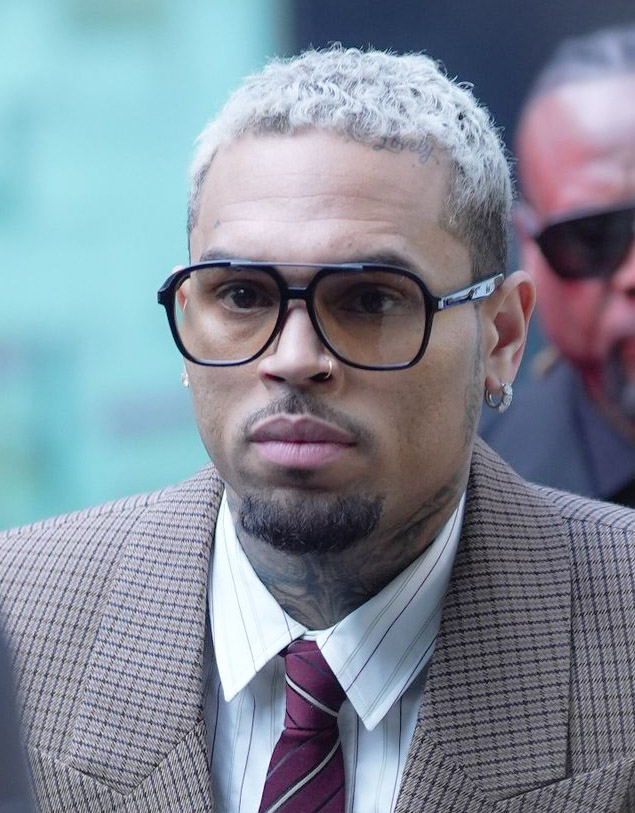
Chris Brown receives eight-month suspended sentence in London nightclub case
The R&B star will not go to prison immediately after pleading guilty to affray, but the court imposed a custodial sentence suspended for 12 months.
Sky News’ October 26 report includes footage from the sentencing and Judge Tony Baumgartner’s televised remarks. Video credit: Sky News.
The Black Angle News Desk · AI-assisted reporting
Chris Brown received an eight-month prison sentence suspended for 12 months on October 26 after pleading guilty to affray in a London nightclub case. The decision means the R&B singer does not go to prison immediately, but it is still a custodial sentence rather than an acquittal or a fine. If he commits another offense during the suspension period, a court can activate some or all of the term.
What the suspended term means
Southwark Crown Court also sentenced Brown’s vocal coach, Omololu Akinlolu, to four months in prison suspended for 12 months. Both men pleaded guilty in July. A suspended sentence gives a person the chance to remain in the community while complying with the court’s conditions; England and Wales’ Sentencing Council says a new offense or failure to meet imposed requirements can lead to the original term being served.
The violence and the harm
The case arose from violence at Tape London in Mayfair during the early hours of February 19, 2023. Prosecutors said surveillance footage showed Brown striking music producer Abraham Diaw twice in the head with a glass tequila bottle and swinging it at him again. The Metropolitan Police said Diaw was chased, pushed to the floor and kicked as the confrontation continued. He went to a hospital with head and knee injuries.
What Brown admitted—and what prosecutors dropped
Brown admitted affray, an offense involving unlawful violence that would cause a person of reasonable firmness to fear for their safety. Prosecutors did not proceed with separate charges of assault, attempted grievous bodily harm and possessing an offensive weapon after the guilty plea. Those dropped counts were neither convictions nor findings that the alleged conduct did not occur; the sentence was for the affray conviction the court accepted.
Why the judge suspended the sentence
Judge Tony Baumgartner described the episode as serious public violence and emphasized the danger of repeatedly using a bottle near a person’s head. Contemporary court reporting says he weighed Brown’s guilty plea, stable employment, charity work and recent period without convictions when deciding to suspend the term. Brown’s lawyer conveyed a profound apology to the people who were present and called the roughly 20-second incident ugly and unacceptable.
A case that took more than three years
The sentencing closes the criminal case more than three years after the nightclub incident. Brown and Akinlolu left Britain after the confrontation and were later circulated as wanted, according to police. Both were arrested in Manchester in May 2025 when Brown returned for a concert. Brown was eventually released after providing £5 million in security, a bail guarantee that allowed his international tour to continue; it should not be confused with the punishment imposed Monday.
Brown’s record was part of the sentencing discussion. He pleaded guilty in the United States to assaulting Rihanna in 2009 and later admitted a 2013 assault. The judge nevertheless said celebrity and commercial success did not entitle him to special treatment. That point matters because public reaction can swing between treating fame as a reason for unusually harsh punishment and treating popularity as a shield from ordinary accountability.
Accountability without distortion
The Black Angle’s view is that the suspended term should be described with precision and without minimizing the person who was hurt. Brown avoided immediate imprisonment; he did not avoid conviction or receive a ruling that the violence was trivial. The victim’s injuries, the court’s finding of dangerous conduct and the defendant’s guilty plea belong at the center of the account, alongside the mitigating factors the judge was legally required to consider.
The tour question remains separate
The outcome also separates the court case from speculation surrounding four canceled Usher and Chris Brown tour dates. The promoter previously attributed those cancellations to the health and well-being of the touring party and crew and did not link them to sentencing. Monday’s ruling removes the possibility of an immediate prison term disrupting future dates, but it does not retroactively establish why those earlier shows were canceled.
A suspended sentence is both punishment and a test of future conduct. For the next year, the headline is not simply that Brown walked free from court; it is that a judge imposed a prison term, declined to enforce it immediately and left activation available if the order is breached. Accountability now depends on compliance, while the public record should continue to distinguish the conviction from charges that were dropped.
The sentence and central facts are independently documented by AP, Reuters and the Metropolitan Police. A full official sentencing transcript was not available at publication, so the judge’s reasoning is summarized from contemporaneous courtroom reporting and the televised remarks.
Published by The Black Angle. Editorial standards & corrections.
The conversation (0)
Bring your perspective. Keep it thoughtful, relevant, and respectful. Community guidelines
Sign in or create an account to comment under your username. You can also comment as a guest; guest names are not verified.
Loading the conversation…