Angela Stribling, pioneering BET and Quiet Storm voice, dies at 58
The broadcaster, television host and jazz vocalist helped shape BET’s early cultural coverage and became the first woman to host WHUR’s Original Quiet Storm.
The Black Angle News Desk · AI-assisted reporting
Angela Stribling, whose voice moved across Black television, Washington radio and jazz stages for decades, died September 26 at age 58. Her husband, Ken Washington, said in a statement shared through WHUR that she died peacefully at home after a two-year battle with brain cancer. Washington and Stribling’s sister, Darlene, were beside her. A public celebration of life is planned in Washington, D.C., with the date and venue still to be announced.
Stribling’s significance rests not only in the programs she hosted but in the media spaces she helped widen. At BET, she became one of the network’s early on-air personalities, bringing entertainment reporting and artist conversations to a national Black audience. In Washington, she became the first woman to host WHUR’s Original Quiet Storm, carrying forward a format born at Howard University that turned late-night radio into a place for slow jams, intimacy and community. Her work joined the polish of television with the closeness of a familiar radio voice.
Her broadcast career began in Washington with internships at WTTG-TV and WOL-AM. She worked in programming, sales, on-air shifts and voiceover production at WOL before moving to WHUR, where listeners responded to her warm delivery. On television, a guest-hosting opportunity led to an audition at BET. She first appeared as a relief host, then spent four years co-hosting Screen Scene, the network’s entertainment-news program. That work placed her among the personalities who helped define BET’s early visual language and its relationship with Black music and celebrity culture.
Stribling later helped launch BET Jazz. She co-hosted Jazz Central with Ramsey Lewis and Lou Rawls, presenting performances and interviews with major artists, and also hosted Jazz Discovery and Jazz Scene. The programs gave jazz musicians a consistent national platform during a period when the genre had limited space on mainstream television. She also worked on Baltimore television, including the Black community-focused magazine program On Time and WJZ-TV’s Evening Magazine.
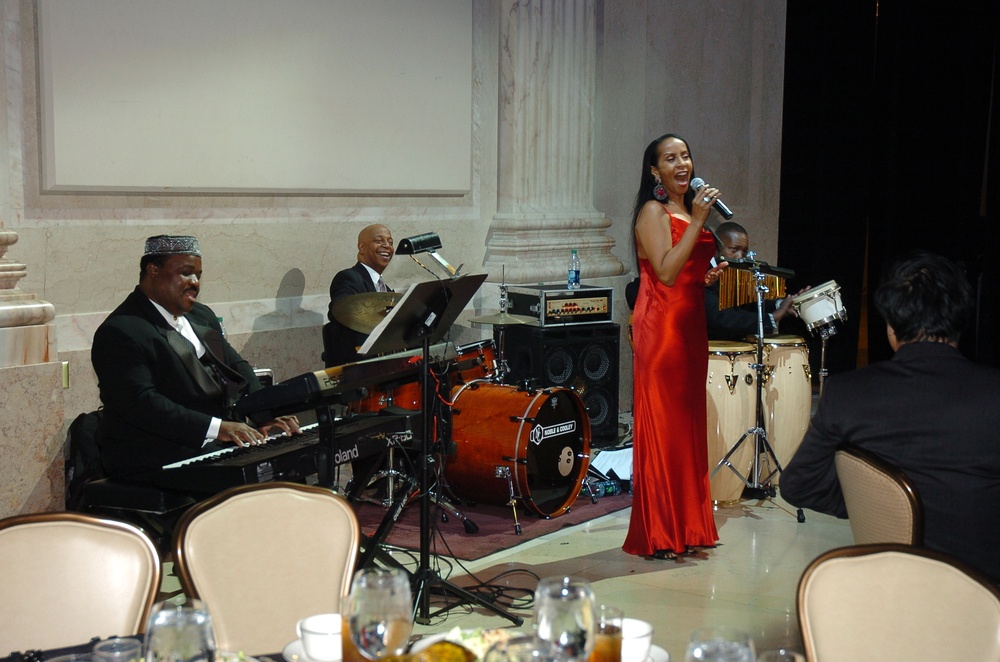
Music was not a side note to her broadcasting career. Stribling was a classically trained vocalist who described jazz as her first passion. She performed at New York’s Blue Note, appeared onstage with artists including Stevie Wonder and Chaka Khan, and toured internationally in Asia, Europe and Africa. Her ability to interview musicians came from the perspective of a working performer who understood rehearsal rooms, stagecraft and the vulnerability involved in sharing art with an audience.
Radio eventually brought many listeners even closer to her. Pillow Talk with Angela paired music with conversations about love, relationships and emotional well-being. She also became a widely heard voiceover artist, contributing to national advertising and serving for decades as a voice associated with the Black Engineer of the Year Awards. The range was unusual: entertainment journalism, jazz performance, intimate overnight radio and polished commercial narration all carried the same recognizable calm.
Colleagues and listeners have remembered Stribling as a generous presence as much as a skilled broadcaster. WHUR General Manager Sean Plater said she made people feel welcome and valued, while former BET colleagues described a friendship that continued after their years at the network. Those tributes reflect the kind of cultural labor that is easy to underestimate: not simply appearing on air, but creating trust across formats and generations.
Stribling’s legacy belongs to the history of Black-owned and Black-centered media institutions that built audiences by speaking with cultural fluency rather than treating Black life as a niche. She helped make room for jazz, romance, celebrity reporting and thoughtful conversation on platforms designed with Black listeners and viewers in mind. Her death is a loss to that tradition, but the programs she helped shape and the broadcasters she influenced keep her voice present.
Stribling’s family and WHUR confirmed the death date and two-year brain-cancer illness. Details for the planned Washington celebration of life have not yet been announced.
Published by The Black Angle. Editorial standards & corrections.
The conversation (0)
Bring your perspective. Keep it thoughtful, relevant, and respectful. Community guidelines
Sign in or create an account to comment under your username. You can also comment as a guest; guest names are not verified.
Loading the conversation…