The Truth About Elon
Musk’s public statements, X’s decisions, his father’s recorded remarks, and the Memphis-area fight over xAI deserve scrutiny grounded in evidence.
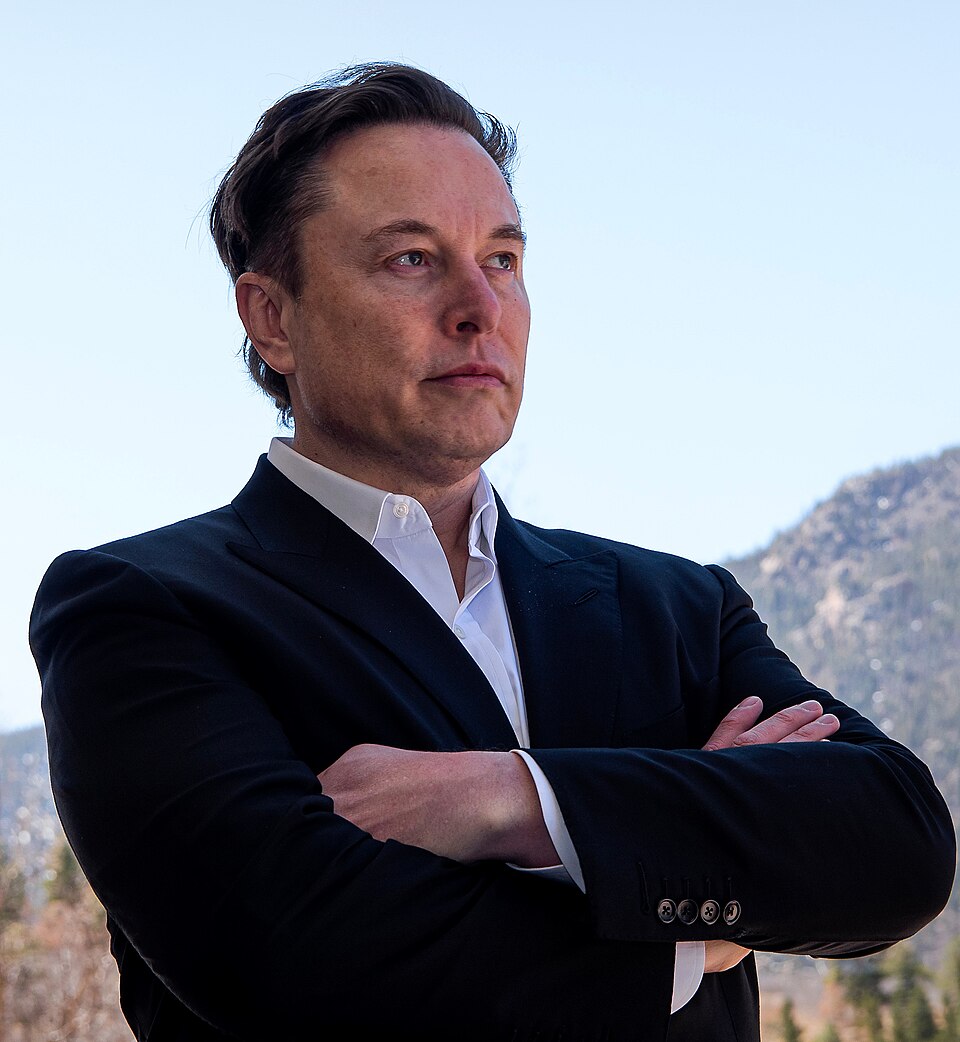
Elon Musk’s power deserves scrutiny without mythology. The Black Angle’s assessment is that several documented statements and decisions in his public record have amplified racist narratives or weakened protections against racial abuse. That is an editorial judgment based on the record below, not a claim that we can read his private beliefs. We do not need invented quotations or speculative motives to ask who pays the price for his influence.
In November 2023, Musk endorsed a post falsely accusing Jewish people of encouraging hatred against White people. Reuters documented his agreement, including the words “the actual truth.” Later that month, he apologized in a public interview and described the post as among his worst. He denied being antisemitic. The apology belongs in the record alongside the endorsement; it does not make the original amplification disappear.
Under his ownership, X also changed who could return to the platform. Australia’s eSafety Commissioner’s January 2024 findings recorded 194 reinstated accounts previously suspended for hateful conduct within an Australian reinstatement total. X said it assessed risks but did not subject reinstated accounts to additional scrutiny. The concern is a concrete enforcement choice and its consequences, not a claim that every restored account belonged to a racist.
A February 2025 PLOS ONE study found substantially more hate speech in its English-language sample after Musk acquired Twitter, covering data through June 2023. It did not establish which individual changes caused the increase. X’s published rules still prohibit racial attacks. Our criticism concerns accountability for outcomes and enforcement, not an assertion that its formal policy openly authorizes every form of hate.
The international record matters. Reuters reported in May 2025 that Musk had vocally supported the false narrative of a White genocide in South Africa. The same report noted that a South African court had rejected that claim. Violence against farmers and other South Africans deserves serious reporting; using it to promote a false racial-extermination narrative deserves challenge. In our judgment, such amplification invites audiences to see Black political power itself as a threat.
His father’s remarks can be examined separately. In an interview aired by CNN on November 13, 2025, Errol Musk denied seeing the oppression of Black people under apartheid. Asked about a future United States without a White majority, he said it would be a bad development and asked, “You want to go back to the jungle”. He defended White rule in terms of giving Black people work and food. We regard those recorded remarks as racist: they associate a multiracial majority with decline and dismiss Black oppression. They are Errol’s statements; they do not prove that Elon shares every belief his father expresses.
The Memphis story concerns corporate decisions with consequences beyond a feed. Memphis is in Tennessee, in the United States. In July 2025, the NAACP and Young, Gifted & Green, represented by the Southern Environmental Law Center, appealed a permit for xAI’s South Memphis facility and challenged its earlier use of unpermitted turbines. Their claims of unlawful permitting are the advocates’ allegations, not findings we are presenting as a final court judgment.
In January 2026, SELC pointed to an EPA regulatory revision as support for its position that large temporary gas turbines require permits. That is the organization’s stated interpretation of the federal action. Residents’ right to transparent decisions about their air should not become an afterthought to an AI company’s construction timetable.
A July 14, 2026 Reuters investigation described additional turbines serving Colossus 2, principally across the state line in Southaven, Mississippi. It found potential pollution burdens near disproportionately Black communities and documented residents’ noise complaints. xAI and Mississippi regulators argued that temporary turbines were exempt from permitting; xAI did not respond to Reuters’ request for comment. This is a regional dispute involving distinct facilities, not a reason to collapse every turbine into one Memphis site.
These accounts raise an environmental-justice question: who receives the benefits, and who lives with the costs? They do not establish that Musk selected a location because Black residents could not resist. We make no such claim. Indeed, the organized challenges described above show residents and civil-rights groups resisting. Calling a community powerless would erase their work.
The standard we propose is straightforward: judge Musk by his documented words, by the decisions of the businesses he leads, and by their effects on people with less institutional power. Demand transparent moderation, independent scrutiny of pollution, and meaningful community participation. Wealth, technical achievement and a claim to defend free expression do not exempt anyone from answering evidence-based criticism.
Evidence-based commentary. Sources are dated; allegations, responses and editorial judgments are identified in the text. No claim is made about an unproven racial motive for facility siting. Responses cited are from published reporting, not interviews conducted by The Black Angle. AI-assisted writing and source review.
Published by The Black Angle. Editorial standards & corrections.
The conversation (0)
Bring your perspective. Keep it thoughtful, relevant, and respectful. Community guidelines
Sign in or create an account to comment under your username. You can also comment as a guest; guest names are not verified.
Loading the conversation…