South Africa deploys more police after anti-migrant protests turn violent
At least 24 vehicles were burned and foreign-owned shops were targeted in Soweto and Durban as officials challenged false claims about a Constitutional Court asylum ruling.
The Black Angle News Desk · AI-assisted reporting
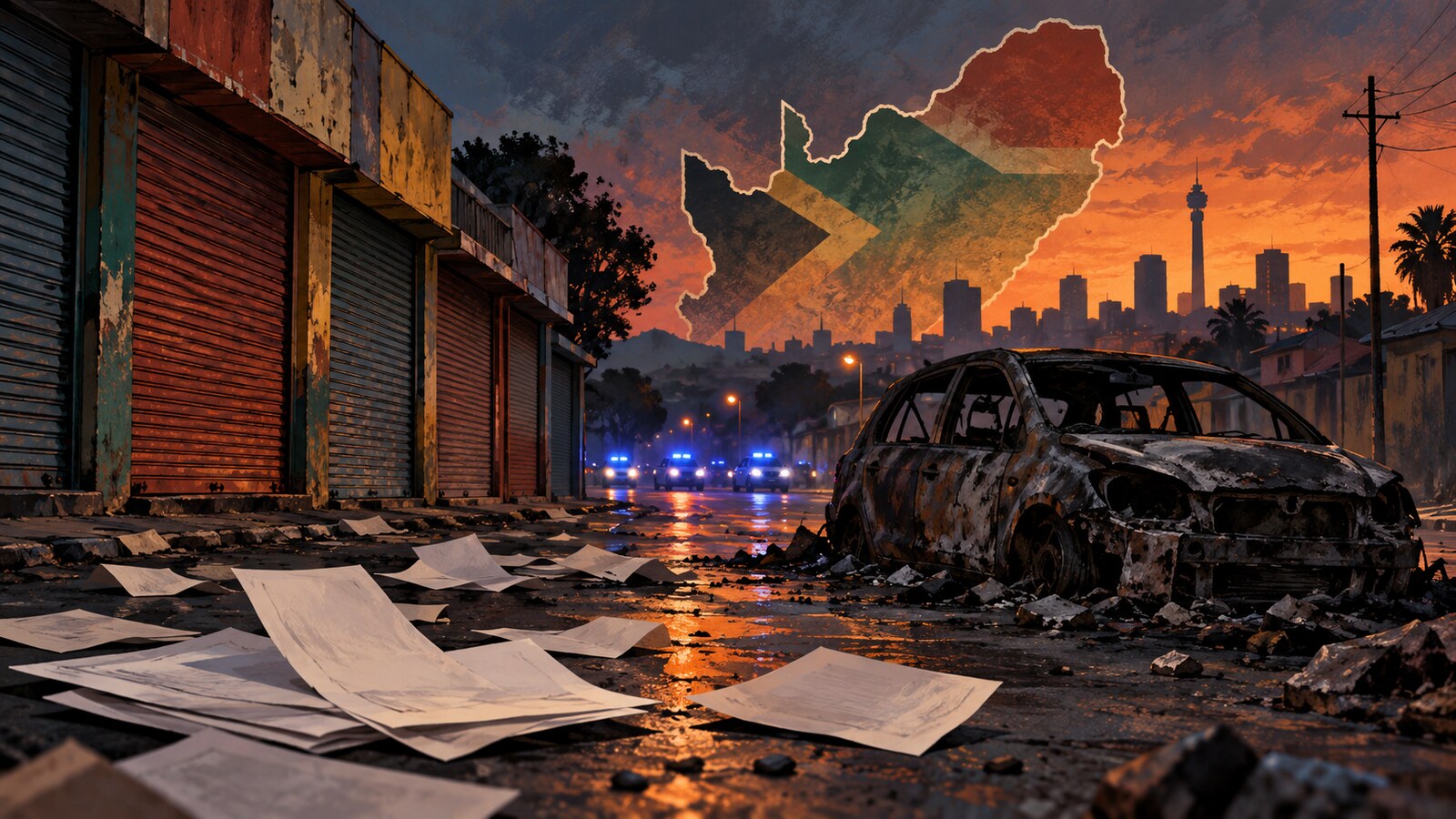
South African authorities reinforced public-order police deployments Thursday after anti-migrant protests in Johannesburg’s Soweto township and central Durban turned violent. Police said 10 vehicles were burned in Soweto and 14 in Durban, while foreign-owned shops were looted or forced to close. The unrest grew around opposition to a July Constitutional Court ruling on access to the asylum process, a judgment government officials said has been distorted online as an automatic path to legal status.
In Soweto, the clashes unfolded near a Department of Home Affairs office in Orlando West. Local reporting described residents moving through the area, forcing foreign nationals out of neighborhood shops and telling them they did not belong. Police said they received reports of gunfire before vehicles were set ablaze, but authorities had not publicly identified who fired or established a complete sequence of events. Reports of injuries from residents also remained unconfirmed in the official accounts reviewed for this report.
Durban saw a separate protest near a refugee reception office followed by fires, looting and damage in the city center. Police said a guesthouse and warehouse were partly burned and that three foreign nationals were arrested on suspicion of assaulting a protester. An arrest is not a finding of guilt, and the available public information did not establish whether that alleged assault began the wider violence. Firefighters and riot police were deployed as smoke rose over parts of the city.
Acting national police commissioner Lt. Gen. Puleng Dimpane said the right to protest does not include a right to commit crimes. She promised investigations and arrests where evidence supports charges. Officials said the immediate situation in Soweto had been brought under control, but roads remained affected and police presence was strengthened in both cities. The government also urged people to reject vigilantism and discrimination while it works through pressure on the asylum system.
The court ruling at the center of the demonstrations is narrower than many claims circulating about it. On July 7, the Constitutional Court invalidated provisions that could exclude people from the asylum system because of procedural problems—including irregular entry, missing an asylum transit visa or failing to report within a deadline—before the substance of their protection claims was assessed. The judgment rests in part on the principle of non-refoulement, which bars returning a person to a place where they may face persecution or serious harm without a lawful review.
The decision does not automatically make an applicant a refugee, grant permanent residence or legalize every irregular entry. It requires officials to accept an application and decide its merits under the Refugees Act. South Africa’s inter-ministerial migration committee said fraudulent, abusive or unfounded claims may still be rejected and that people who exhaust legal remedies without qualifying for protection can face deportation. The committee also rejected social-media claims that refugees gained voting rights through the judgment.
Home Affairs acknowledged that all five refugee reception offices were overwhelmed after it directed staff to accept applications that previously could have been blocked on procedural grounds. The government said it plans to expand processing capacity, strengthen biometric and identity checks, accelerate decisions and improve coordination among immigration and law-enforcement agencies. Those operational pressures are real, but they do not excuse collective punishment of migrants, attacks on shopkeepers or destruction of property.
Thursday’s violence follows months of anti-migrant demonstrations and earlier attacks that drove thousands of African foreign nationals to leave South Africa. Protest organizers and participants have tied their demands to unemployment, crime and pressure on public services. South Africa’s inequality and joblessness demand serious policy answers; treating Black migrants from neighboring countries as a single suspect class does not supply them. That last point is an editorial judgment grounded in the reported pattern of shops, homes and people being targeted because of nationality.
The next test is whether officials can keep people safe while processing asylum claims lawfully and communicating clearly about what the court actually ordered. Authorities have promised further briefings and enforcement against both criminal violence and abuse of the asylum system. Until investigations identify who committed specific acts, claims about gunfire, assaults and responsibility for the escalation should remain attributed—not turned into proof against whole communities.
Police totals and government statements were current late October 8. The reported gunfire, injuries and alleged assault remained under investigation, and responsibility for those specific acts had not been established.
Published by The Black Angle. Editorial standards & corrections.
The conversation (0)
Bring your perspective. Keep it thoughtful, relevant, and respectful. Community guidelines
Sign in or create an account to comment under your username. You can also comment as a guest; guest names are not verified.
Loading the conversation…