North Kivu becomes Ebola hotspot as Kenya strengthens screening after imported death
Congo’s outbreak has passed 8,600 confirmed cases as new hot spots strain treatment and contact tracing in North Kivu. Kenya has listed 57 contacts after its first imported case and death.
The Black Angle News Desk · AI-assisted reporting
New hot spots in North Kivu are now driving a growing share of the Democratic Republic of the Congo’s Bundibugyo Ebola outbreak, while Kenya is tightening airport screening after confirming its first imported case and death. The latest official figures compiled by the U.S. Centers for Disease Control and Prevention list 8,665 confirmed cases and 4,178 confirmed deaths in Congo as of October 5. The CDC describes the epidemic as the second-largest Ebola outbreak on record and substantially faster-moving than previous outbreaks.
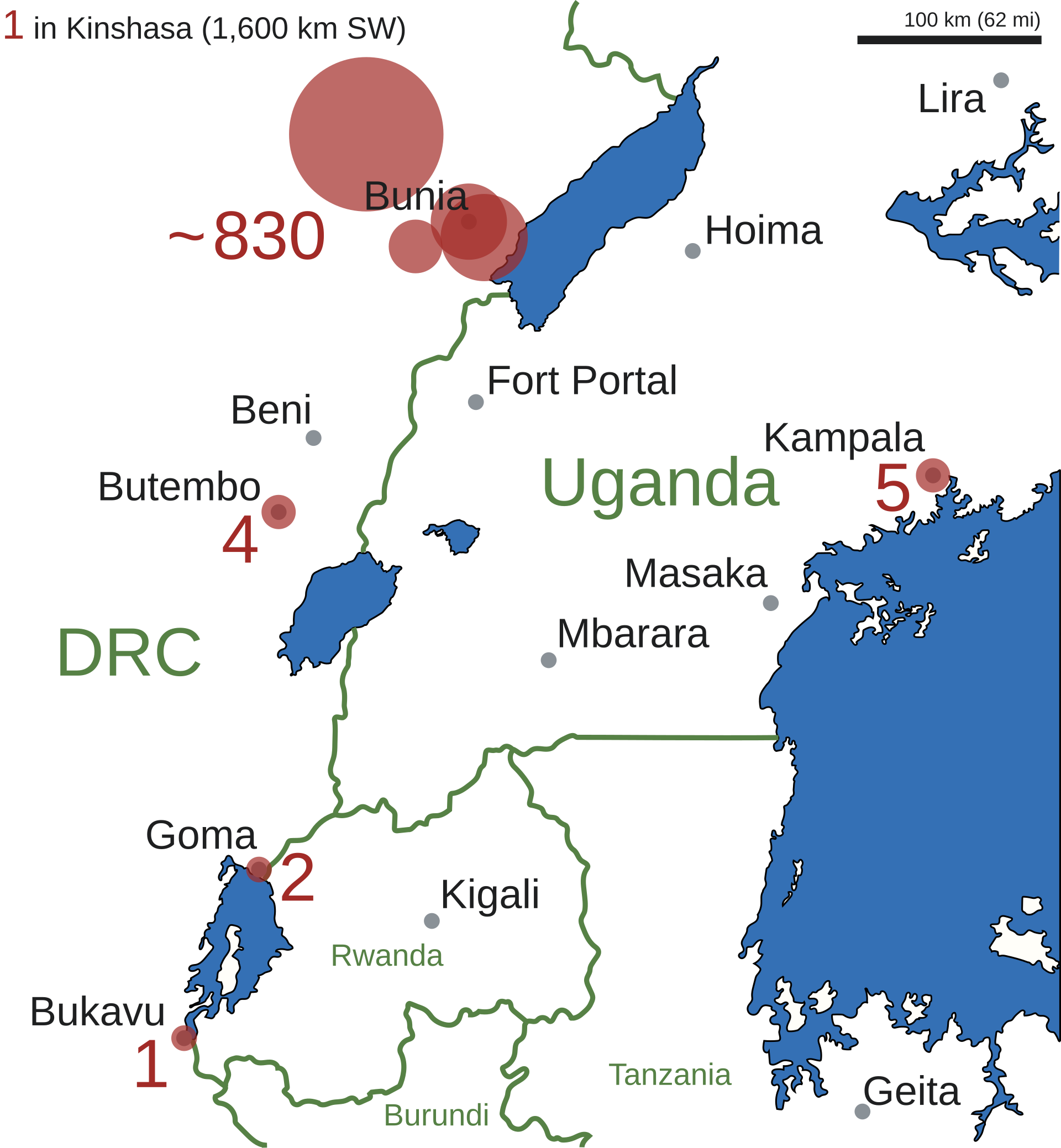
North Kivu accounted for nearly 40 percent of newly confirmed Congolese cases by early October, up from 24 percent at the end of August. Médecins Sans Frontières said new transmission hot spots were appearing each week and treatment capacity remained insufficient. A European Centre for Disease Prevention and Control update counted 1,729 confirmed cases and 1,005 deaths in North Kivu through October 4, with 17 of the province’s 34 health zones affected. Those figures give the province a case-fatality rate of about 58 percent among confirmed cases reported by that cutoff.
The surveillance gaps are as serious as the rising totals. Africa CDC Director-General Jean Kaseya said more than 70 percent of new cases were being detected among people who were not already known contacts, while only 23 percent of the contacts health authorities would expect to identify had been traced. Those two measures are not contradictory: one concerns how many expected contacts are identified, while another measures follow-up among contacts who have already been listed. Both point to transmission chains that remain partly hidden.
Care is also reaching many patients too late. MSF reported that 34 percent of confirmed patients in North Kivu were still being treated in non-specialized health facilities as of September 28 because of limited bed capacity and delays in diagnosis. More than 60 percent of Ebola-related deaths continued to occur in communities rather than treatment centers. In Butembo, a city and surrounding health zone of roughly 2 million people, two new treatment centers have opened, but responders say staffing, supplies and coordination remain inadequate as infections shift between neighboring areas.
Against that backdrop, Kenya’s imported case shows how regional travel can expose gaps even when screening systems exist. The patient was a Kenyan citizen who had lived in Congo for seven years and had reportedly been ill for about a month. He traveled overland from Beni to Kampala on October 2, flew from Uganda to Nairobi on October 3 and passed temperature checks before relatives took him directly to a hospital. Clinicians isolated him after he arrived with symptoms including fever, chills, muscle pain and bleeding beneath the skin.
Two Kenyan laboratories confirmed Bundibugyo virus. The patient died on the night of October 5 and was buried under safe-burial protocols the following day. Kenyan Health Minister Aden Duale said October 7 that authorities had listed 57 contacts, including 10 people in quarantine, and were intensifying efforts to find the others. A dedicated airport gate is now screening passengers arriving from Congo and other countries linked to the outbreak. As of this update, Kenya had announced one imported case and no wider transmission inside the country.
The traveler’s route remains under review. He crossed a Congo–Uganda border that Uganda had officially closed in May and then passed airport screening in Entebbe and Nairobi. Uganda said his temperature was normal at Entebbe. Kenyan officials raised the possibility that fever-reducing medication masked symptoms, but that has not been established as the sole explanation. Public-health specialists also note that early symptoms can be difficult to distinguish and that infrared devices measure surface temperature, so screening cannot substitute for accurate travel histories, rapid clinical recognition and contact tracing.
Bundibugyo virus disease spreads through direct contact with an infected person’s blood or other body fluids, or through contaminated materials. There is no approved vaccine or specific treatment for this strain. Congo has used the Ervebo vaccine under a monitored protocol because of possible cross-protection, but Africa CDC has stressed that the evidence is not conclusive. Early supportive care can still improve survival, and testing, isolation, protective equipment, safe burials and trusted local communication remain central to controlling the outbreak.
The numbers require careful reading because official dashboards use different cutoff dates and are revised as records are harmonized. The CDC’s October 7 page lists 8,688 confirmed cases and 4,181 confirmed deaths across Congo, Kenya, Uganda and France, including 8,665 cases and 4,178 deaths in Congo. ECDC’s October 6 update used Congo data through October 4 and reported 8,603 cases and 4,148 deaths there. These are snapshots of the same fast-changing emergency, not evidence of disagreement about its direction.
The people affected deserve privacy, accurate information and care without stigma. Kenya’s imported case does not by itself amount to a Kenyan outbreak, but it underscores the need for coordinated surveillance across borders. Inside Congo, the immediate tests are whether responders can identify more contacts, expand safe treatment capacity and work through trusted local leaders before new hot spots establish further chains of infection.
Official totals use different reporting cutoffs and remain subject to revision. Kenya had announced one imported case and no wider transmission when this update was published.
Published by The Black Angle. Editorial standards & corrections.
The conversation (0)
Bring your perspective. Keep it thoughtful, relevant, and respectful. Community guidelines
Sign in or create an account to comment under your username. You can also comment as a guest; guest names are not verified.
Loading the conversation…