UN condemns racist abuse targeting Coco Gauff after China Open dispute
The UN human rights office called for solidarity against racism and sexism after Gauff and the WTA described the online attacks. Gauff later withdrew from Wuhan, citing fatigue.
The Black Angle News Desk · AI-assisted reporting
The United Nations Human Rights office has condemned the racist messages targeting Coco Gauff after a disputed point at the China Open. In an October 10 statement, the office said the abuse illustrated how Black women athletes are singled out for racial hostility and urged players, coaches, sports bodies and fans to stand together against racism and sexism. The intervention extends the public response beyond tennis after the Women’s Tennis Association condemned the attacks and said it had contacted Gauff to offer support.
What happened on the replayed point
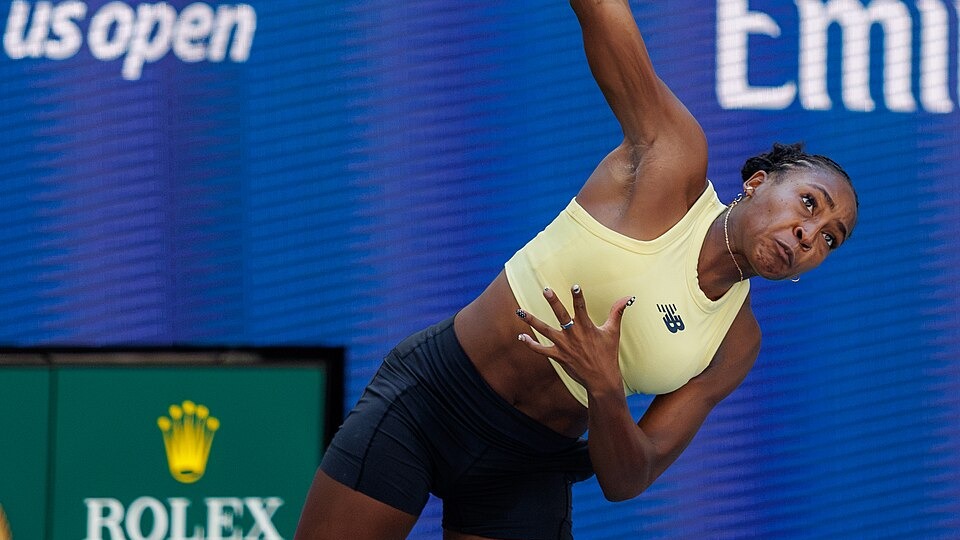
The episode began during Gauff’s October 5 match against 16-year-old Chinese player Sun Xinran in Beijing. With Gauff serving at 4-5 in the first set, electronic advertising panels flickered during a rally. Gauff raised her hand to flag the distraction, and the chair umpire reviewed the sequence before ordering the point replayed. The official WTA match account also records the flickering panels and replay. Gauff won the replayed point, held serve and eventually won the match 7-5, 6-1.
A replay did not mean Gauff alone decided the original point should disappear. Players may request video review for certain judgment calls, including a claimed distraction; the umpire makes the ruling. Gauff said she followed that process and rejected claims that she had cheated. She also said she apologized to Sun after the match, that the teenager understood the situation, and that sharing the court with her was an honor. Nothing in the reviewed accounts suggests Sun encouraged or was responsible for the racist messages.
Criticism crossed into racist abuse
Gauff’s response drew a line that should not be difficult to respect: people can criticize a player or disagree with a call without reaching for racism. She said the volume of racist comments and direct messages was extraordinary and pushed back against language portraying her as dishonest. The abuse turned a rules dispute into a racial attack on the person who asked for a review, even though the official—not Gauff—made the final decision.
The WTA said there is no place in tennis for racism, discrimination or abuse and described the attacks on Gauff as appalling. The governing body has introduced an artificial-intelligence monitoring system intended to identify online abuse directed at players and officials. A WTA and World Tennis report counted more than 12,000 abusive posts and messages in 2025, up from about 8,000 the year before. Those figures show that the problem extends beyond one player and one match, even though they do not measure every private message or identify the senders in Gauff’s case.
Gauff separates the abuse from the result
On October 7, Gauff lost 6-3, 6-3 to Elise Mertens in the round of 16. She told reporters that the preceding days had been draining and said she coped by turning off her phone. At the same time, she did not use the abuse to erase her opponent’s achievement or offer a simple explanation for the result. Gauff said she had not played well and credited Mertens for performing on the important points. Her match included 34 unforced errors and eight double faults.
Hours later, Gauff withdrew from the Wuhan Open, where she would have been the defending champion. Her statement cited fatigue after a long year and said her body needed time to rest and recover. That is the reason she publicly gave. It would be speculation to diagnose a medical condition, claim the racist abuse caused the withdrawal, or assign the China Open loss to one factor. Her own words support a more careful account: the online attacks were emotionally draining, her performance fell short, and she chose recovery over another tournament.
The extra labor imposed on Black athletes
For Black athletes, the demand to manage racial abuse can become extra labor layered onto training, travel, competition and public scrutiny. Gauff had to explain a permitted rules request, defend her character, protect a teenage opponent from misplaced blame and then answer questions about how the episode affected her—all while playing the next round. Recognizing that burden does not require insulating any athlete from fair criticism. It requires refusing the idea that a disputed call opens the door to racial degradation.
The immediate responsibility now sits with the accounts and platforms that carried the abuse, as well as tennis authorities working to protect players. Monitoring tools can help document patterns, but support also depends on enforcement and on fans rejecting racist attacks rather than amplifying them. Gauff’s message was direct: disagreement belongs in sport; racism does not.
Gauff and the WTA publicly described the racial abuse; The Black Angle did not independently review the private messages or identify their senders. The article does not treat the abuse as the sole cause of her match loss or tournament withdrawal.
Published by The Black Angle. Editorial standards & corrections.
The conversation (0)
Bring your perspective. Keep it thoughtful, relevant, and respectful. Community guidelines
Sign in or create an account to comment under your username. You can also comment as a guest; guest names are not verified.
Loading the conversation…